Thursday, 23 January 2020

How to Install Best Custom Recovery For Android

How to Install Best Custom Recovery For Android
When it involves modding Android, root gets all the glory, but an honest custom recovery is basically the sole thing you would like. Not only does it allow you to copy your entire phone, install flashable ZIPs, and cargo custom ROMs like LineageOS, but a custom recovery will even allow you to root your device. For years now, the sole custom recovery worth mentioning has been Team Win's TWRP.

The reason for TWRP's success is simple because it supports many Android phones. Really, the sole hurdle when it involves using TWRP is getting the custom recovery installed within the first place, so we'll show you ways to try to to just that.

Requirements

To use this method, your phone will got to be rooted and your bootloader will got to be unlocked.

This is because the app that installs TWRP uses root to try to to so, and with TWRP being a custom recovery image (rather than one provided by your phone's manufacturer), your phone won't let TWRP replace your stock recovery interface unless the bootloader is unlocked.

The best thanks to lookout of both of those requirements is to use CF Auto Root, which works for over 300 different devices. This utility automatically unlocks your bootloader, then roots your phone in round . To learn more about using CF Auto Root, inspect our in-depth guide the topic .

However, some phones aren't supported by CF Auto Root. If this is often the case with yours, we recommend manually unlocking your bootloader, then installing TWRP using fastboot.

Step 1: Install the Official TWRP App

First up, you will need to put in the app which will assist you install TWRP on your phone. It's the official TWRP app from Team Win, and you'll grab it for free of charge from the Google Play Store.

Download Official TWRP App
Install the Official TWRP App

Step 2: Grant Permissions

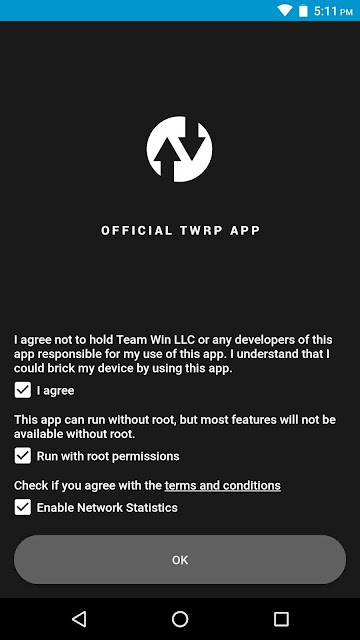
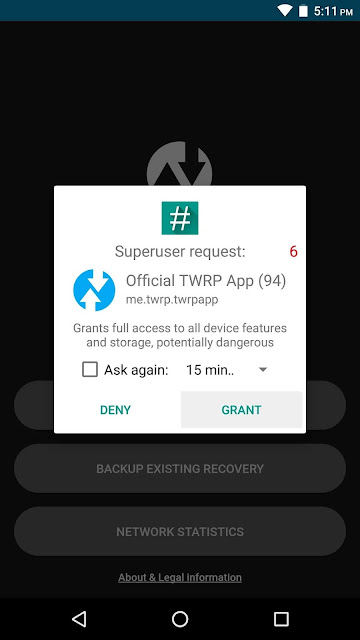
Now, open the TWRP app, then you will be asked to accept the terms of service, so tick all three boxes, and now press "OK." From there, the TWRP app will request for root access, then press "Grant" on the Superuser popup.
Install Best Custom Recovery for Android

Back Up Your Existing Recovery

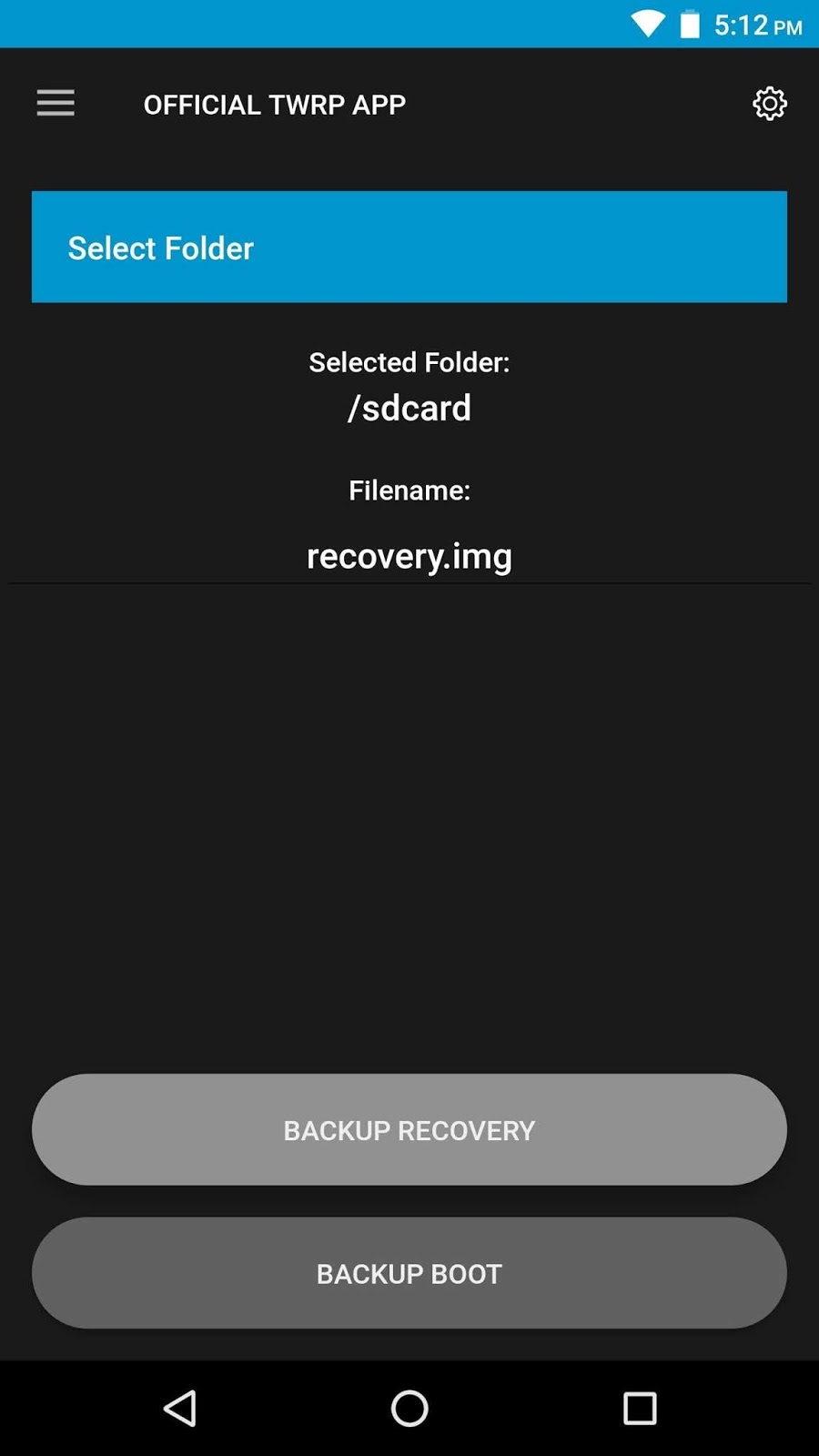
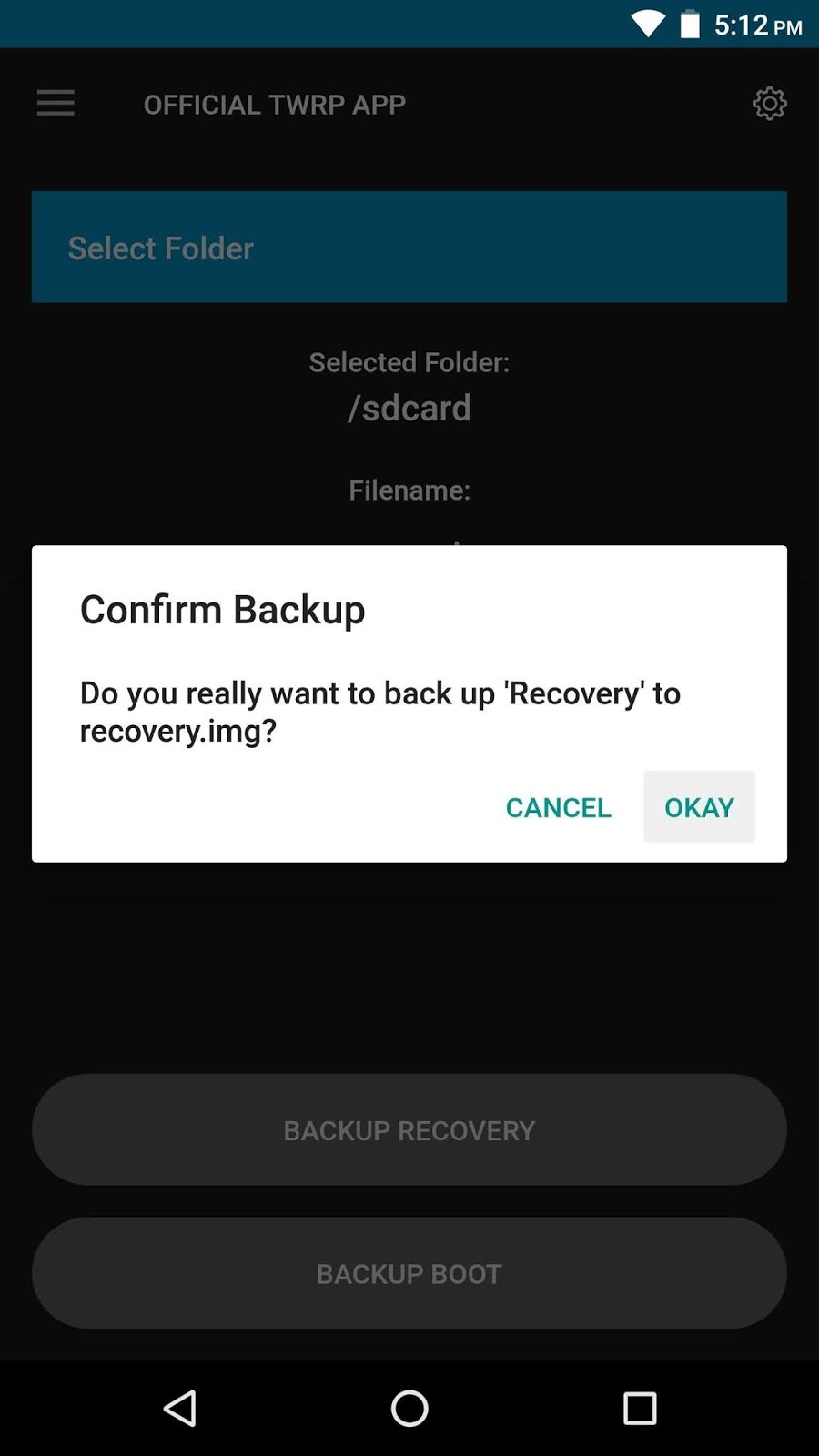
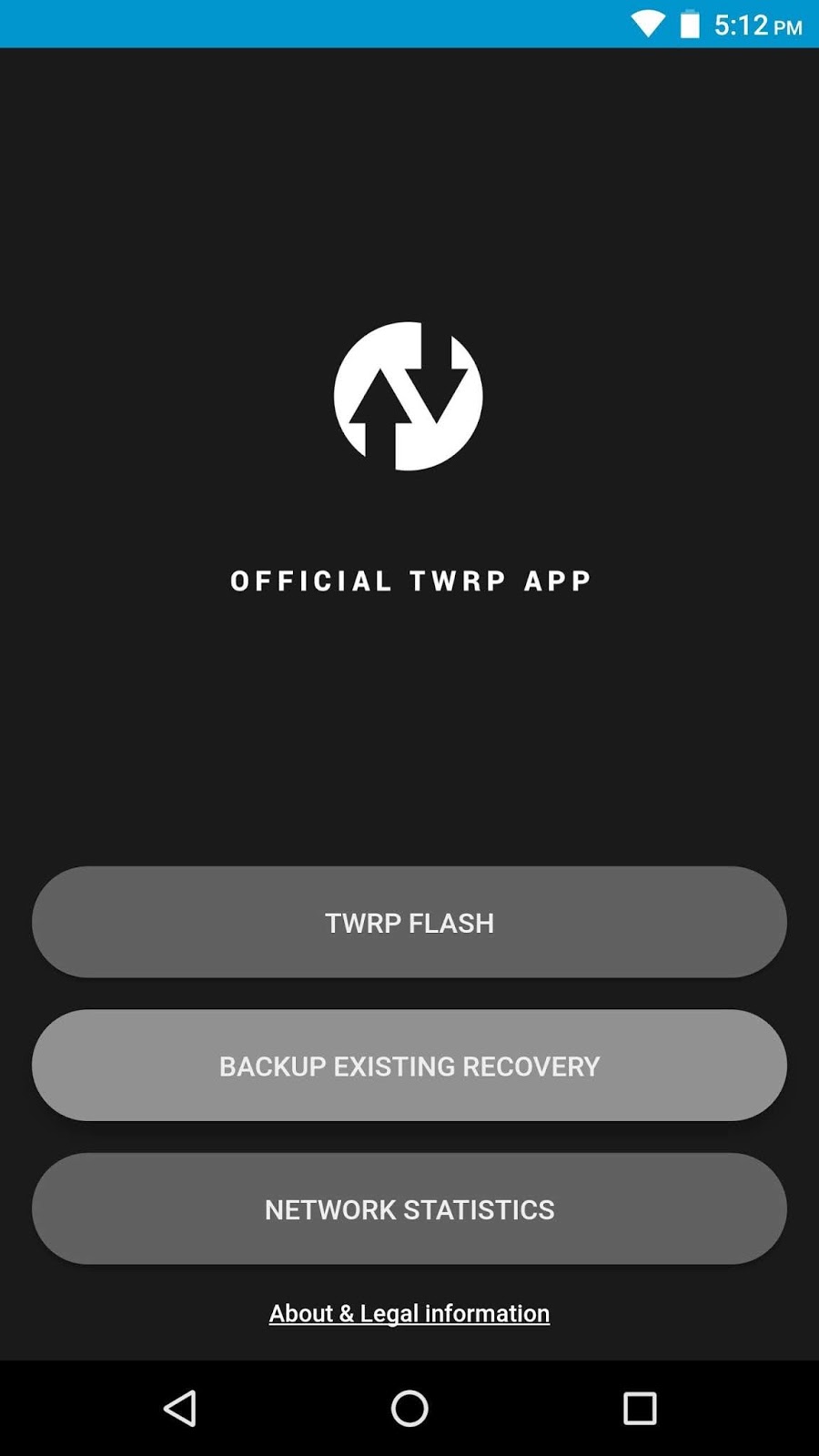
In the future, if you would like to simply accept OTA updates or revert to stock, the simplest thanks to do that would be to make a backup of your existing recovery image before you flash TWRP. To do that, tap "Backup Existing Recovery" within the TWRP app's main menu, then select "Backup Recovery" and press "Okay."
Install Best Custom Recovery for Android
This process will take a minute or two, but when it's done, a copy of your existing recovery image will be saved on your SD card or internal storage partition. Keep track of this file, and if you would like to get rid of TWRP within the future, you'll restore this using the TWRP app's "TWRP Flash" function.
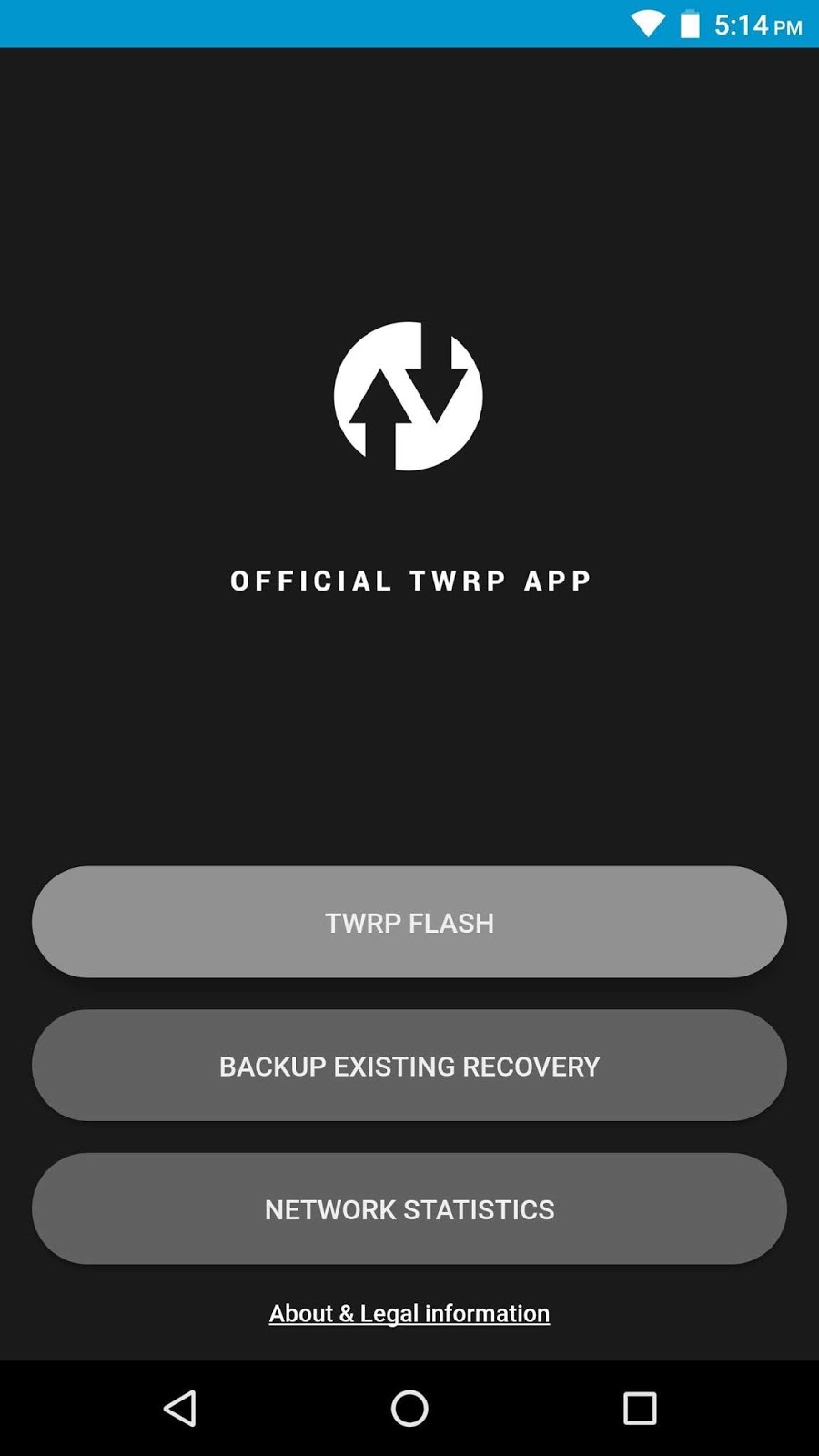
Step 4: Download the exact TWRP Image for Your Device

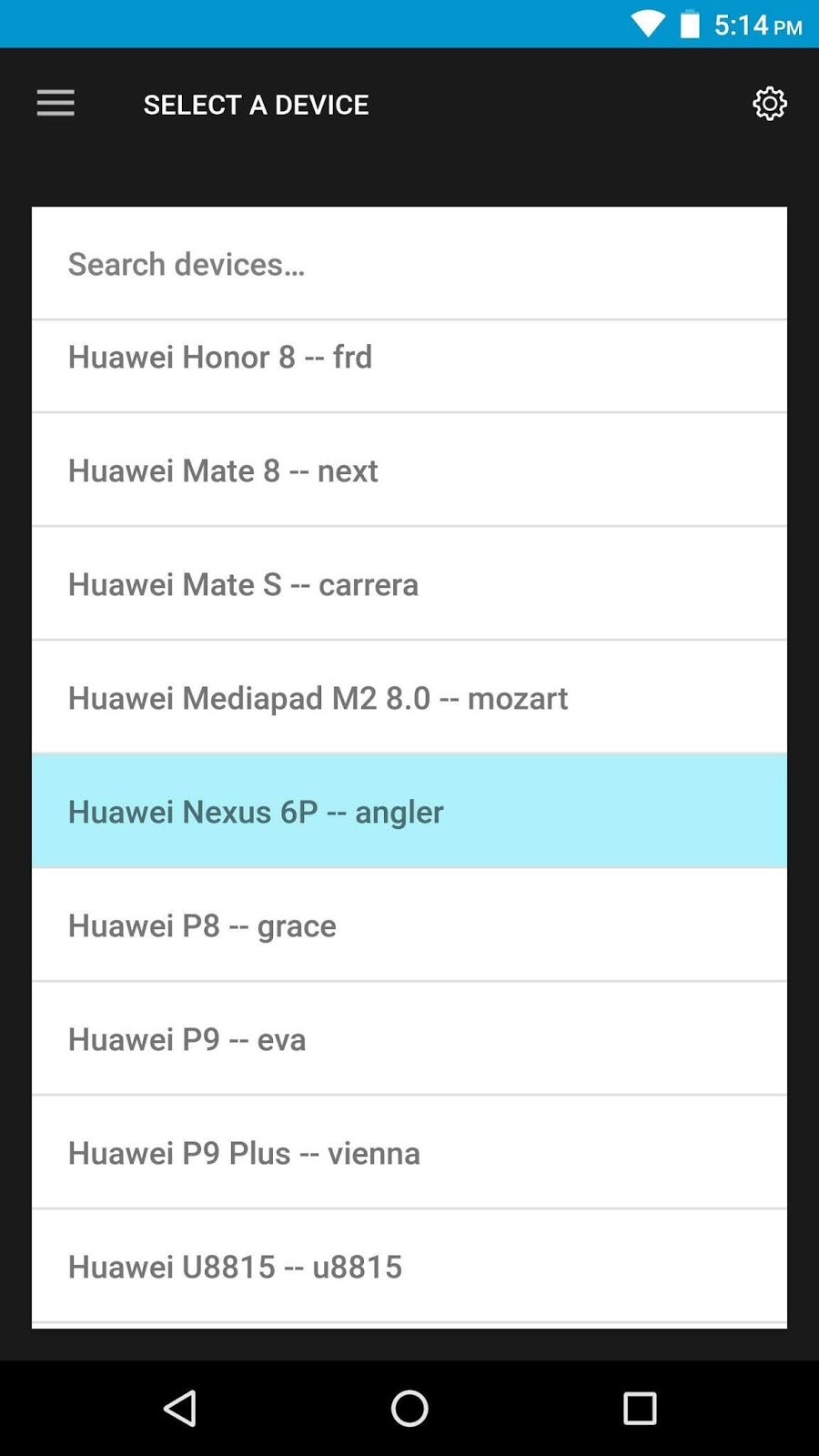
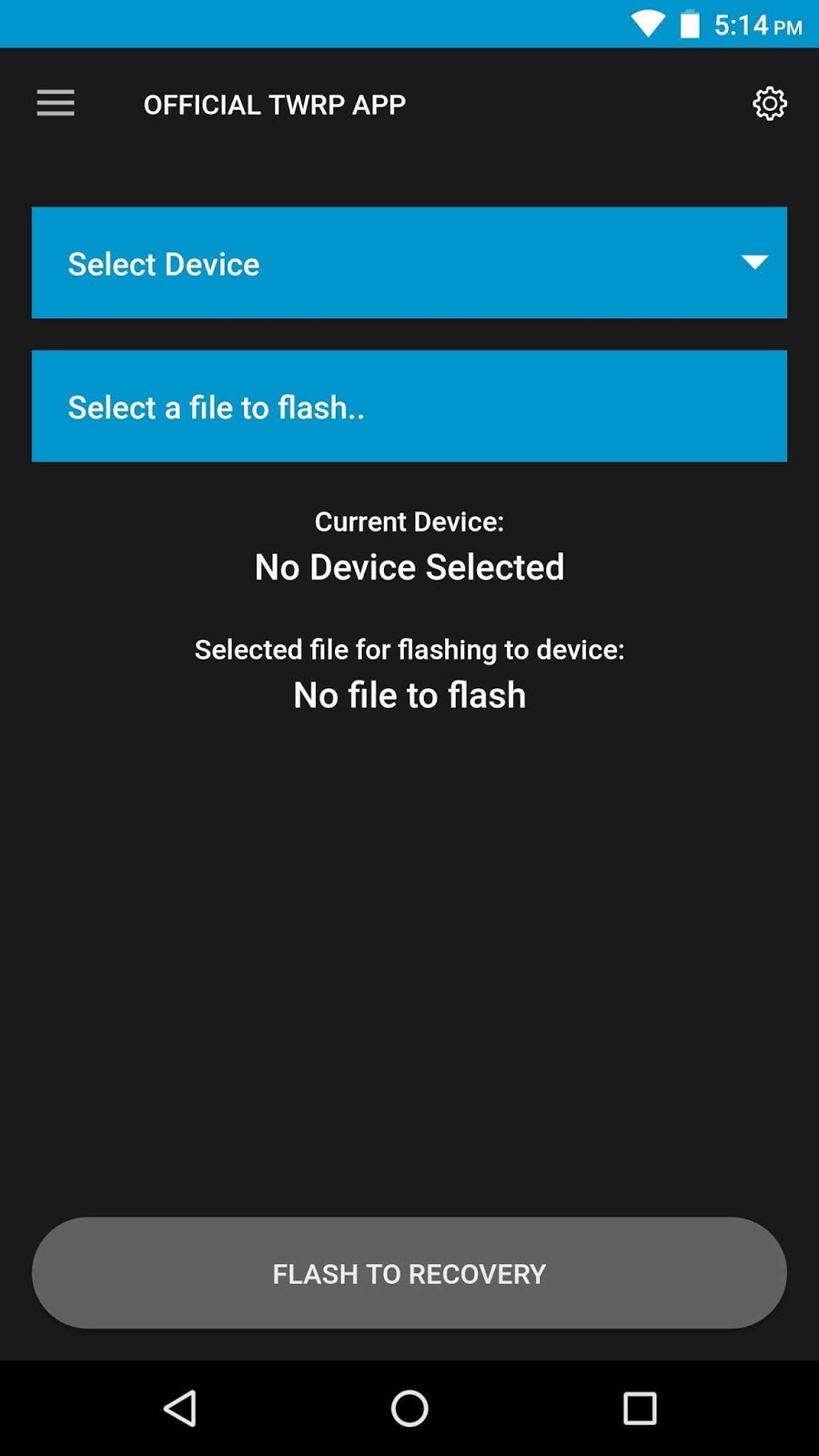
Now it's time to download TWRP itself. To do that, press "TWRP Flash" on the TWRP app's main menu, then tap "Select Device" on the subsequent screen. From there, choose your model from the list.

Install Best Custom Recovery for Android

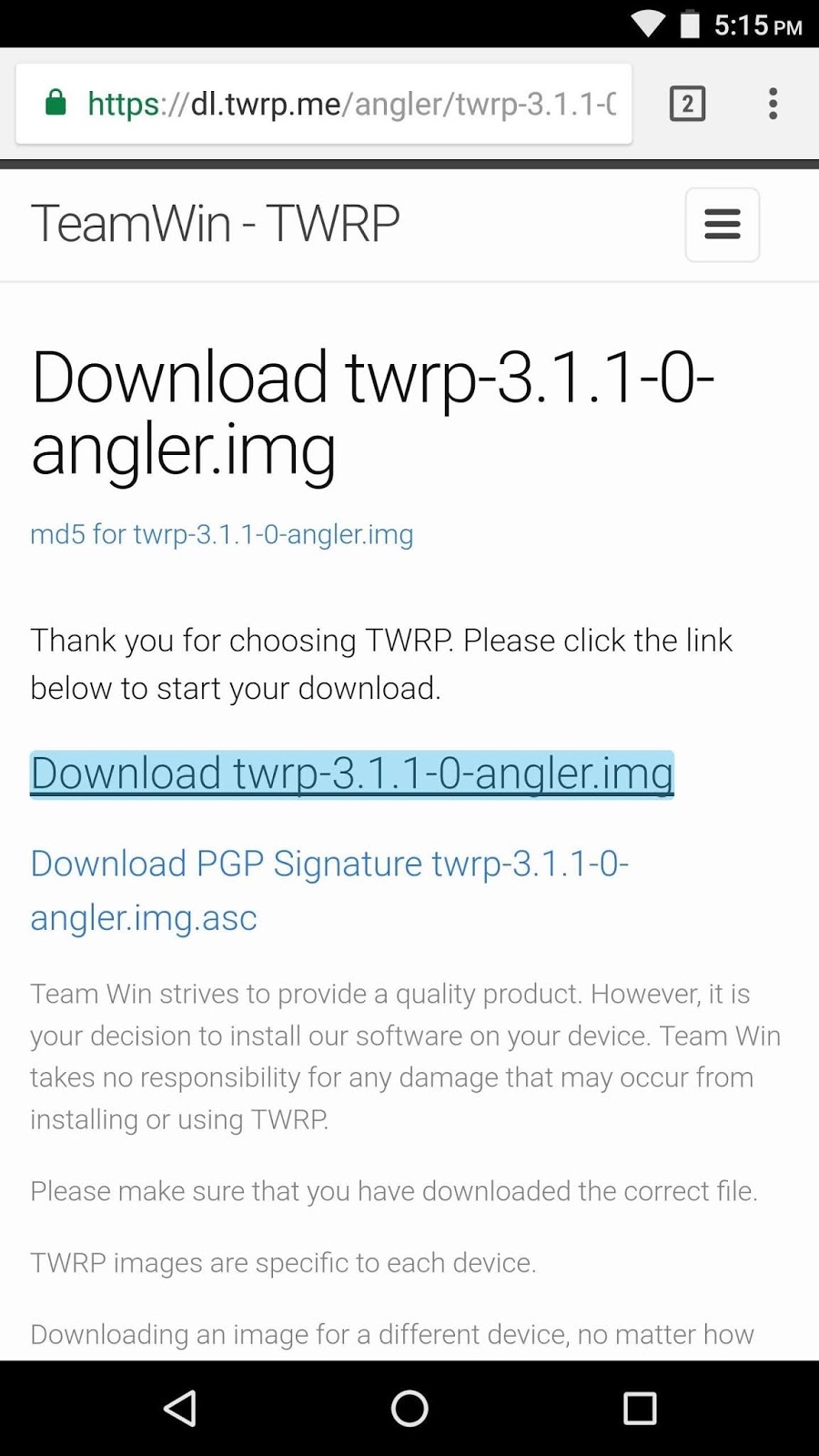
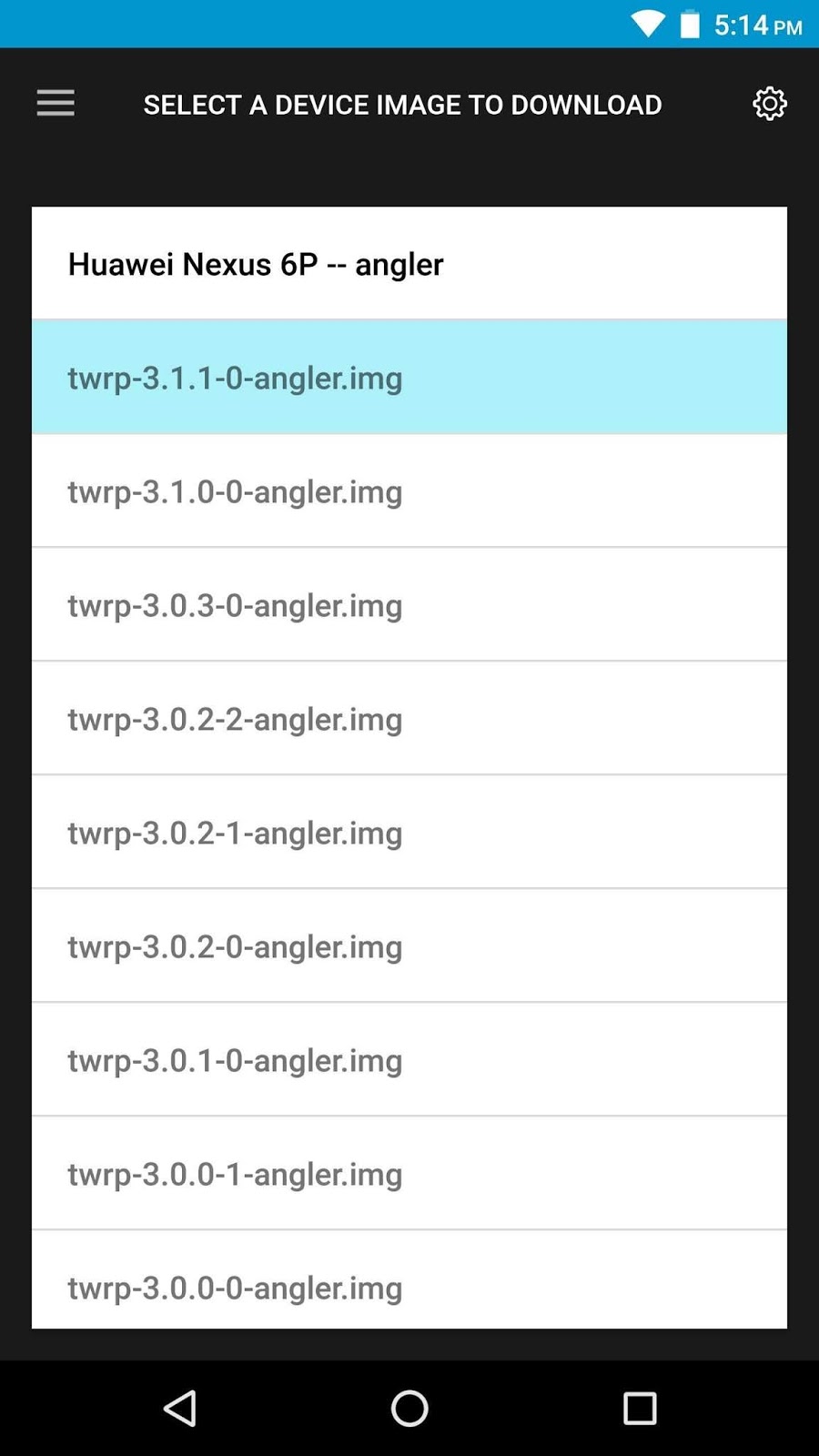
Next, you will be prompted to settle on a TWRP version to download. We recommend going with the newest version, which can be first within the list. Once you've selected a version, you will be taken to a download page in your browser. Tap the most download link towards the highest of the page, and when that's finished, press your back button to go back to the TWRP app.
Install Best Custom Recovery for Android

Step 5: Install TWRP


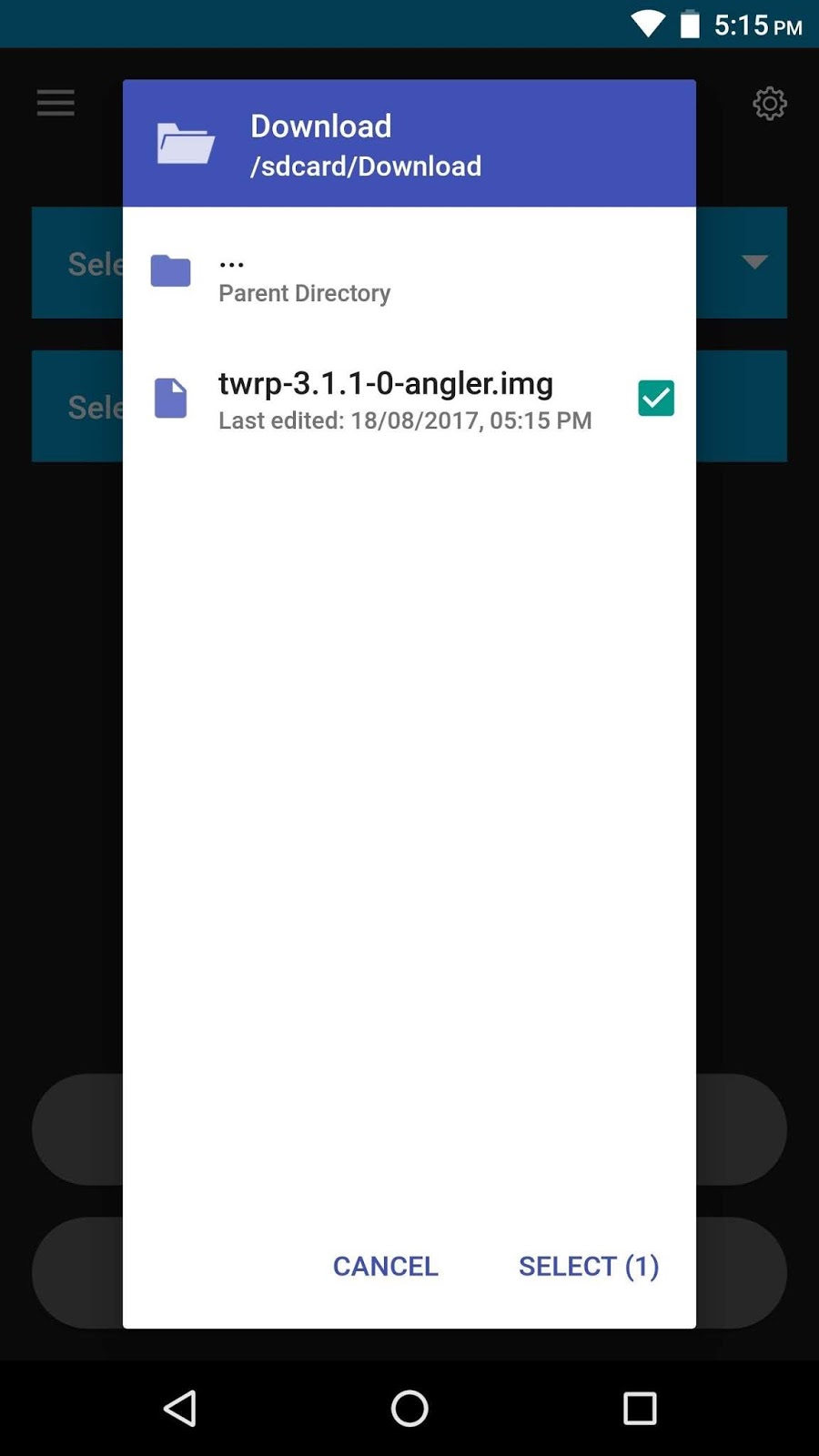
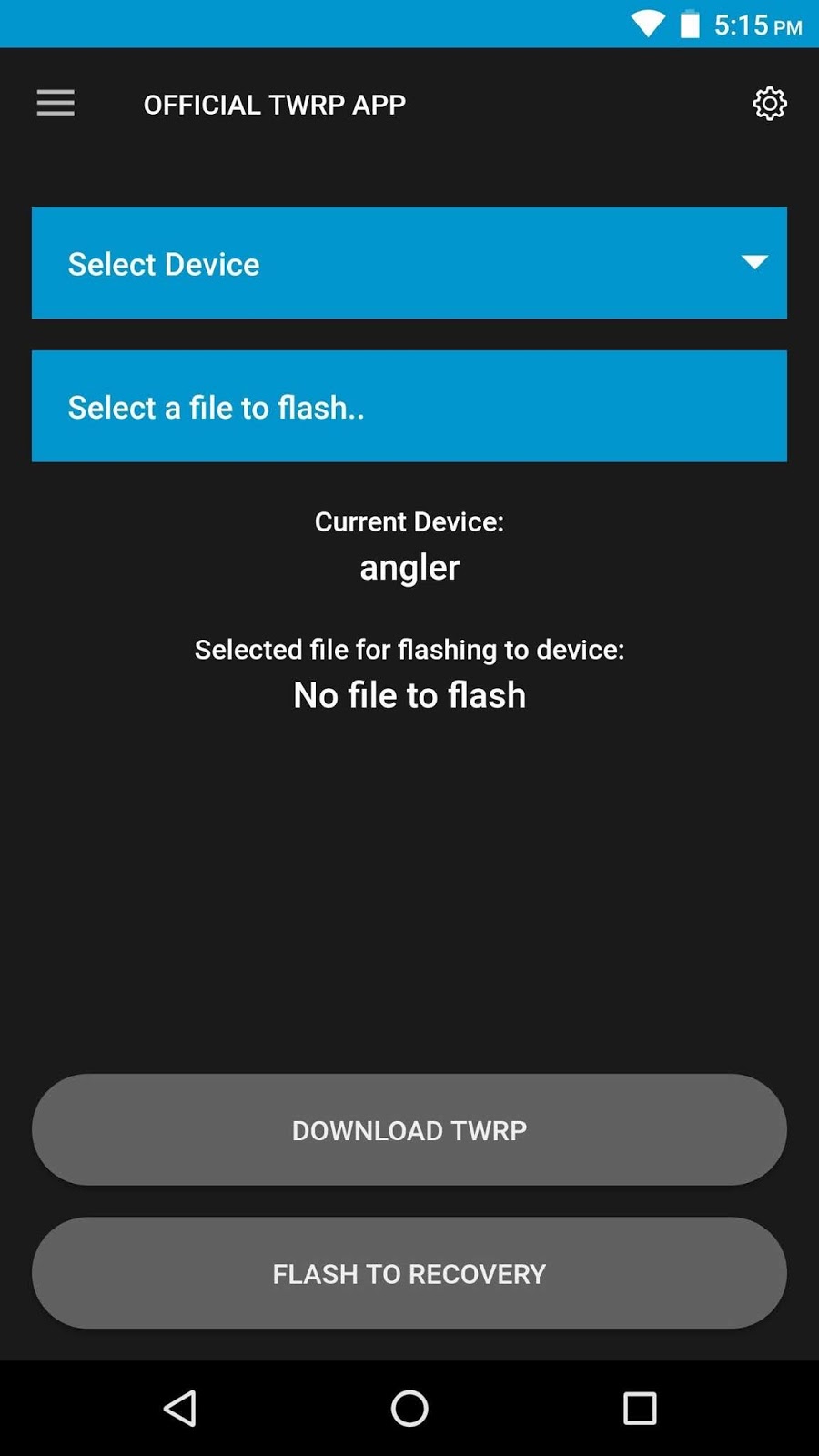
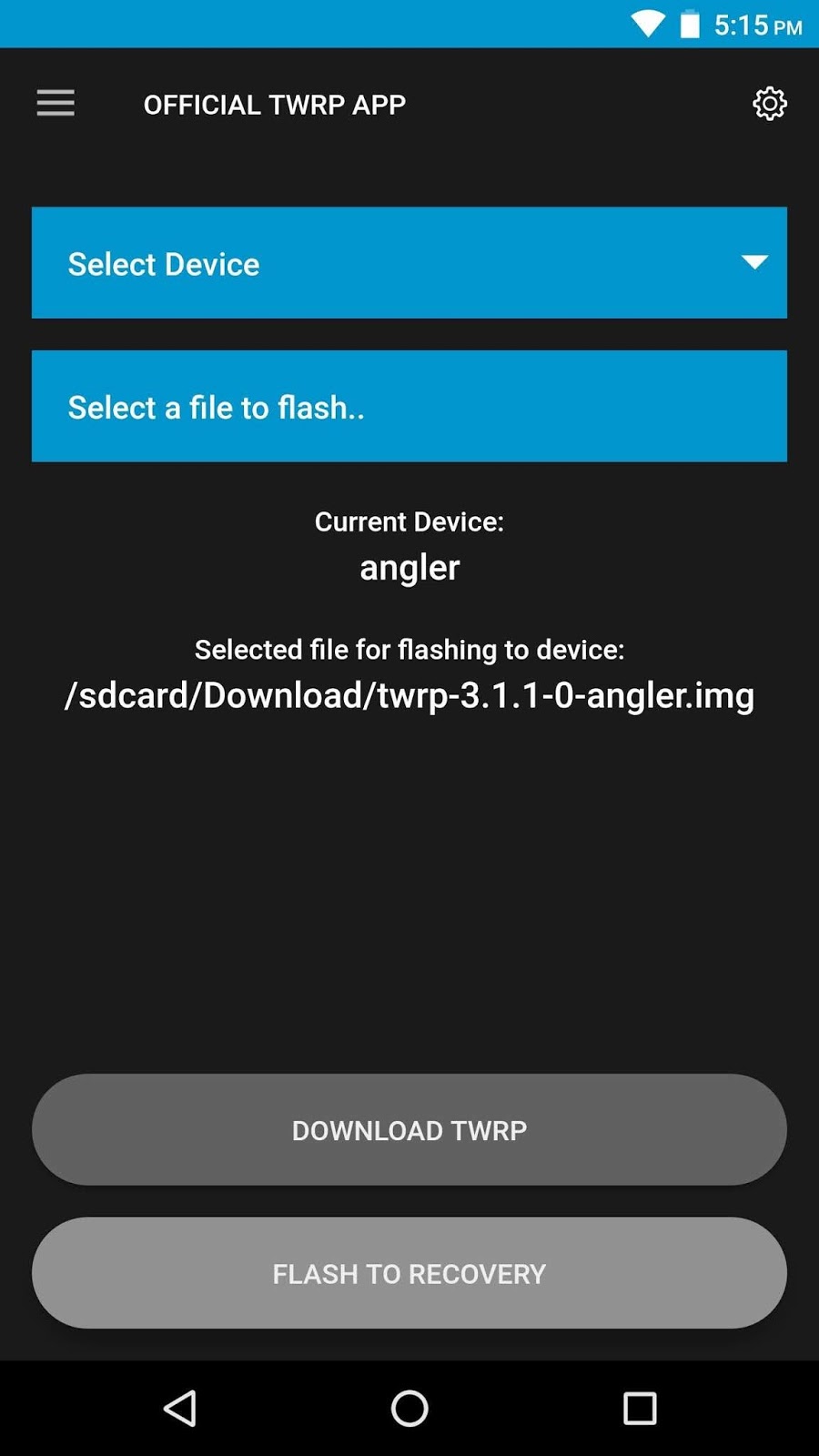
Now, from the TWRP Flash menu, tap "Select a file to flash." then, use the menu that appears to navigate to your device's download folder, then select the TWRP IMG file and click the "Select" button.
Install Best Custom Recovery for Android

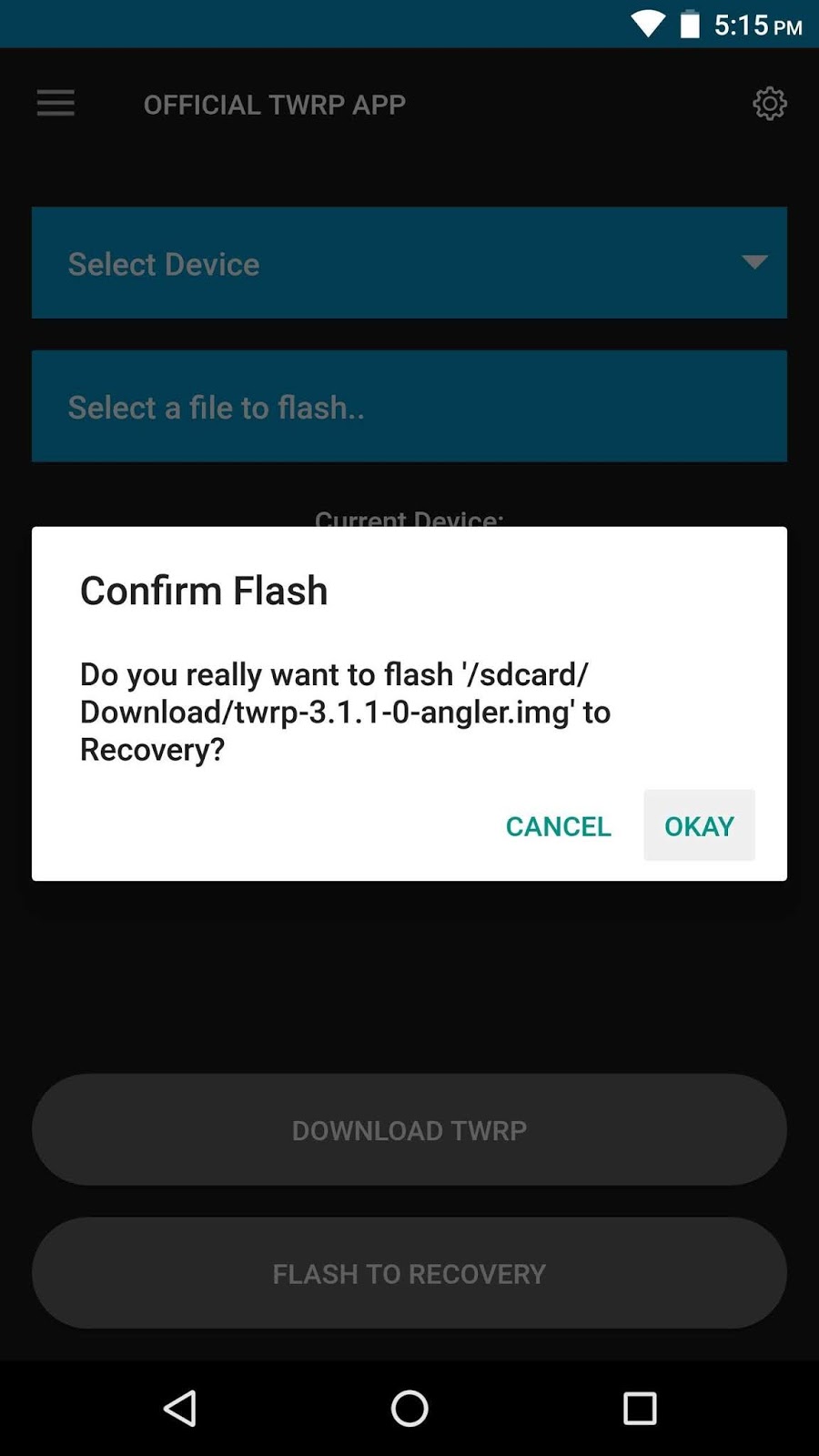
At now , you're able to install TWRP. So tap "Flash to Recovery" at the lowest of the screen, then press "Okay" on the prompt. It'll take roughly 30 seconds to end , and when it's done, you'll see a message confirming that TWRP was installed.
Install Best Custom Recovery for Android

Step 6: Make TWRP Your Permanent Recovery


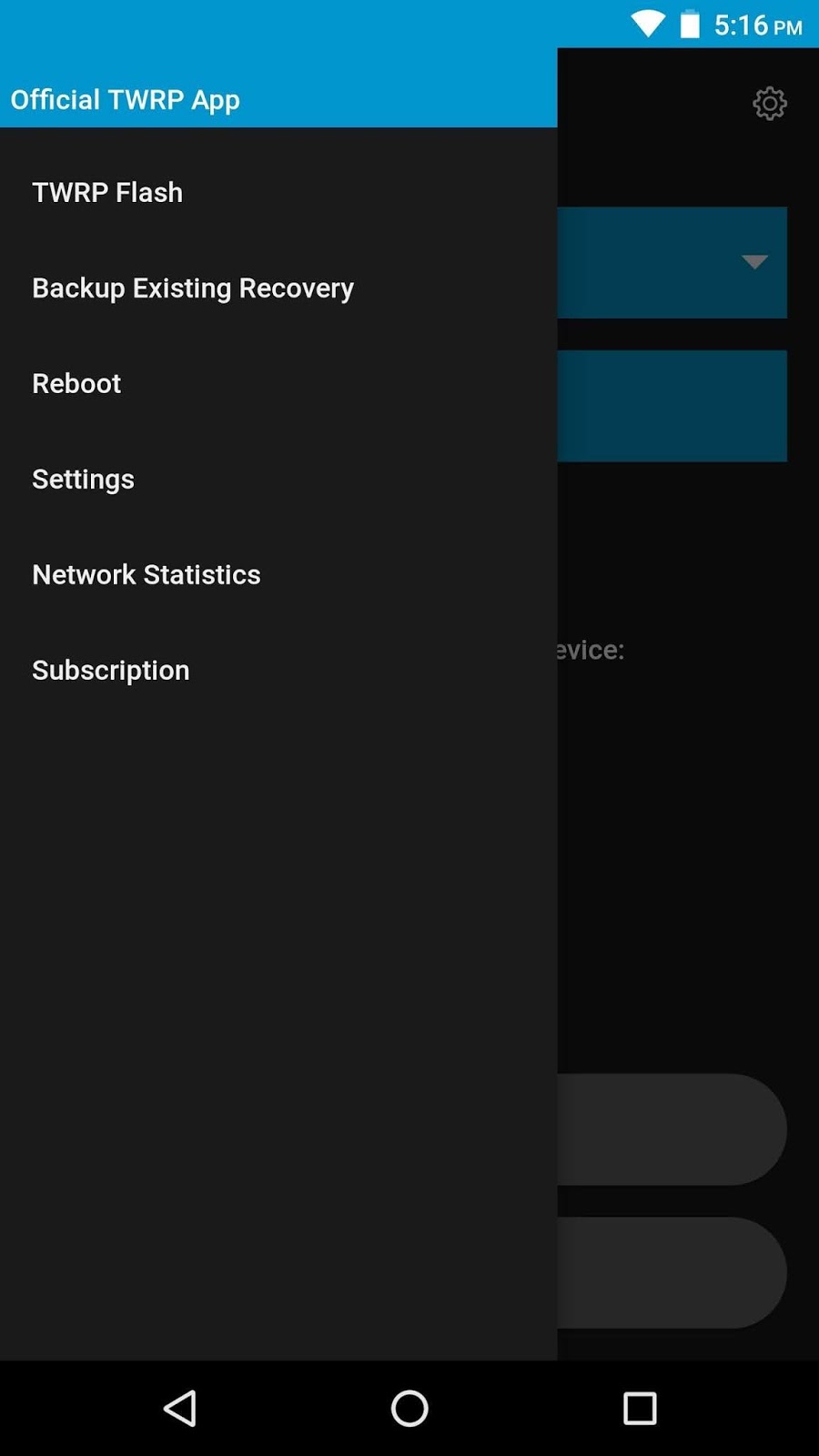
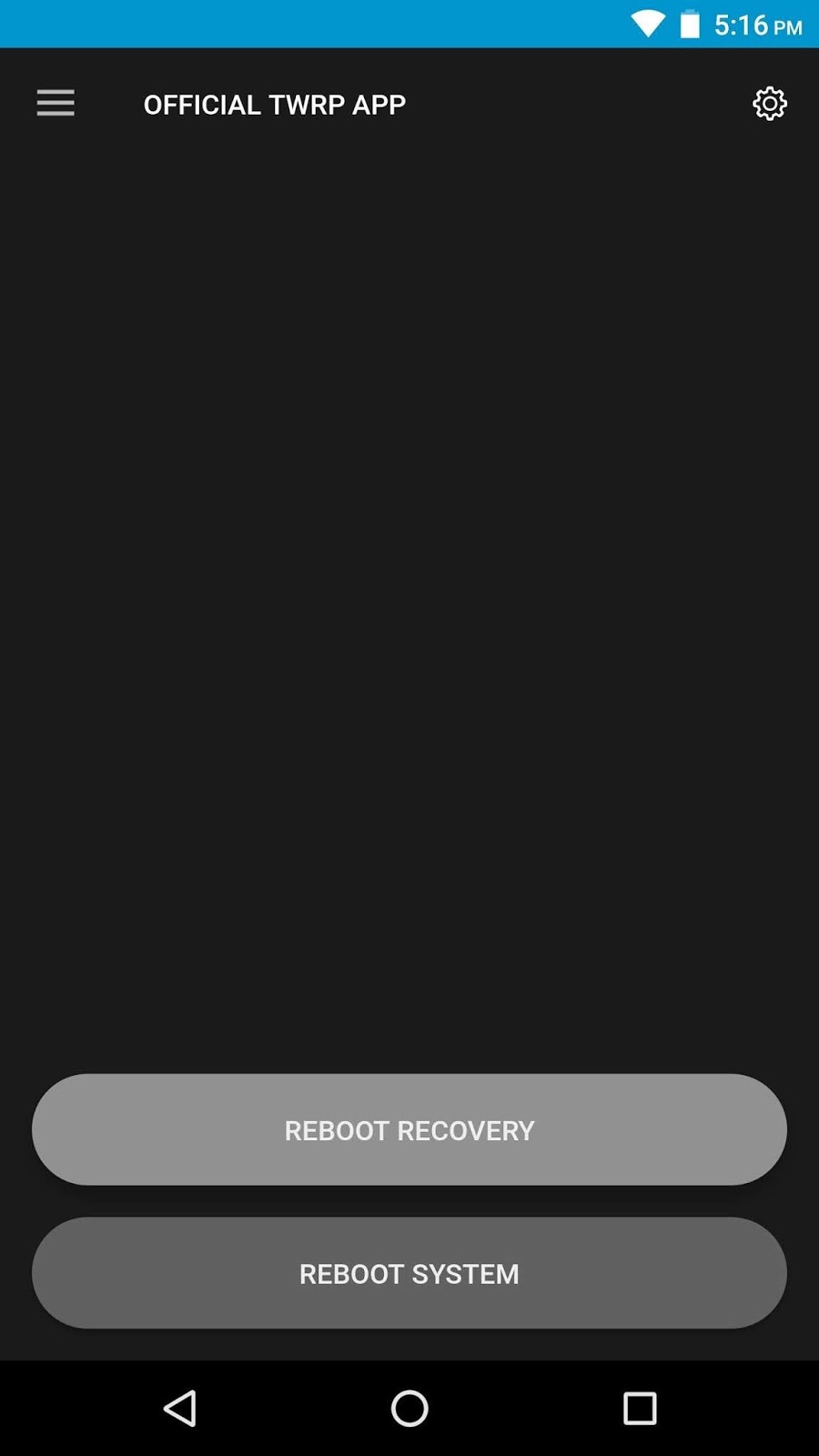
Finally, you'll got to form TWRP your permanent recovery, otherwise Android may overwrite it with the stock recovery image subsequent time you reboot. to try to to this, start by selecting "Reboot" from the TWRP app's side navigation menu, then press "Reboot Recovery" on the next screen. When TWRP boots up, you will be prompted to form it your permanent recovery, so swipe the slider that says "Swipe to permit Modifications" and you will be all set!
Install Best Custom Recovery for Android
But before you escape to flash ZIPs and custom ROMs, the first thing you need to do is create a full NANDroid backup. this is often a restore point just just in case anything goes wrong within the longer term , and we've covered the tactic at the next link:


Read More

Wednesday, 22 January 2020

What is Blaotware Apps and How to uninstall bloatware and preinstalled Android apps

What is Blaotware?

Bloatware is often commercial software that is preinstalled on a device by the manufacturer, whether it's useful or not, and tends to waste memory and resources. Sometimes you'll want to get rid of these apps that take up space on your apps list, home screen and internal storage.

Most users never touch a lot of pre-installed apps on their new phone, but rather than leave them there wasting precious computing power and slowing down your phone, it's best to remove or at least disable them. This guide will show you how.

Uninstalling vs. disabling bloatware

When it comes to shifting annoying bloatware, you essentially have two options - disable or uninstall. Both have their pros and cons, but what are the differences? Uninstalling bloatware is the more drastic of the two options, and involves completely removing the files from your device. While this is the best way to ensure that the app will not be bothering you anymore, it is risky as it could cause problems further down the line if some of those files are needed.

Disabling bloatware is much more risk-free. It will ensure that the app does not take up valuable RAM by running in the background but it also means that the app is not really 'gone', in the sense that it is if you have uninstalled it. Depending on the app and your device, the choice between uninstalling and disabling certain apps might not be yours to make anyway. Let's take a look at both approaches.

Disabling bloatware: general guidance

Many apps still consume resources while they’re not in active use. They also take up space within the app drawer. Since Android 4.0, however, there has been the choice to disable apps.
  1. Head to Settings > Apps.
  2. Here, on most phones, you'll find three tabs: All Apps, Disabled, and Enabled.

By tapping on this or that app, you'll notice that some apps are often uninstalled. This applies to apps you'll have downloaded yourself but there'll even be unnecessary bloatware that you simply can remove (as within the above example, the phone came with Booking.com's app pre-installed).

Some apps can't be uninstalled or disabled (the Settings app, for example). These apps are essential for Android to run properly. Anything that doesn't fall under one among these two categories can usually be disabled unless it's on a protected system partition (some manufacturers deliberately do that with their apps).

Or, if you employ a third-party app for emails, you'll make the default email app on Android disappear. When disabling an app, the system warns you that some programs won't work properly afterwards. This refers to apps that rely on the app in question to function normally.

Should you change your mind, you'll return to the app list and reverse the method . Every app will continue to be listed there, even if it is invisible in the app drawer. Although the layout can vary slightly depending on the manufacturer's OS, the process is very similar on most smartphones. Below you'll find out how easy it's to uninstall Samsung apps.

How to delete or disable Samsung's preinstalled apps

Samsung's UI deviates from stock Android during a few ways, and it comes with an alternate process to disable Samsung's bloatware apps:
  • Simply open the App Drawer.
  • Then long continue any app to mention a bubble which will allow you to disable the app, or uninstall if possible.

A disabled app will not run within the background and can not receive any updates, eliminating unnecessary drain on resources.

How to delete preinstalled apps

It can be frustrating when you really want to delete an app but the system only lets you disable it. If you really know what you're doing, there's a way to get complete control over your phone's software.

If you are not afraid of voiding your warranty, or getting rid of certain sensitive apps like Samsung Pay or certain online banking apps, you can also root your device. Then you can completely uninstall any app. System app remover (ROOT) helps you are doing just that. However, be warned, doing this might make any number of other apps stop functioning properly.

What happens if I disable Android apps?

Once disabled, the apps disappear from your app drawer, stop receiving updates and not run silently within the background. In addition, any apps that depend upon the disabled app will pack up . Should you disable Google Play Services, for example, several system apps will go down and, more than likely, a few apps that are not directly related to Google will start to behave erratically.

It is therefore important to possess a reliably researched list of apps that don't cause fatal accident once you disable them. The above list is incomplete, and can remain that way without your help. Therefore, we invite you to share your experiences with deactivated apps in the comments.

Uninstall tons of apps

We are all guilty of being a minimum of a touch lazy when it involves cleaning up our smartphones. Apps that we not use can quickly accumulate out of sight. Uninstalling individual apps through the Play Store is time-consuming, so it's more practical to get rid of a load all directly . In our guide, we have summarized how multiple apps can be deleted at once using the free app Cx File Explorer.

The first step is to download Cx File Explorer from the Google Play Store.
  • Open the app. If it’s your first time opening the app, you will have to give the app some permissions such as photos, media, and files on your device.
  • Select apps at the bottom of the menu.


  • You can now tick the apps you want to remove on the right-hand side.
  • Select the apps you would like to get rid of and tap uninstall at rock bottom of the screen.
For safety, you want to verify each app by pressing OK. The advantage of this is often that you simply can choose to not delete an app you mistakenly selected without having to cancel the whole operation.

There you've got it, these are the simplest ways to delete, stop and conceal those unwanted apps. When was the last time you cleaned up the apps on your phone? Do you have any questions or suggestions? Share them with us in the comments below.
Read More

Monday, 20 January 2020

What is Root and How to Root Your Android Phones

What Is Root?


In the simplest terms, "root" is that the top most folder on your Android device. If you have experience using Windows Explorer, you can think of root as the drive C:\, where all of your folders like Program Files and your Windows files are stored.

However, unlike Windows, Android doesn't permit you to get to these top-level folders and leaves you stuck behind a virtual wall about halfway up the file tree. This is done so that novice users don't accidentally compromise their device by deleting necessary files.


Rooting your device gives you access to those top folders in order that you'll make system-level changes like getting obviate bloatware apps, blocking ads in apps, or even modifying your SystemUI to offer your device a totally New Look and feel.

There are a couple of drawbacks to rooting your device, most notably that your device will presumably not receive over-the-air firmware updates (in most cases). Secondly, rooting voids the warranty on most devices, so you'll likely be out of luck thereon end if something happens to your phone after rooting it. Lastly, there are potential security risks involved, since rooting your device also will grant apps access to your top-level folders. However, you ought to be ready to mitigate these concerns by installing a root manager like SuperSU or Magisk.

Android Devices

Due to the vast number of Android devices on the market and therefore the differences between these devices, there's not a rooting method which will universally work on all devices. However, there are two methods that will work for a wide variety of phones.

The first method involves flashing Magisk in TWRP, and it is your best bet if you own a more moderen device. This gives you systemless root and therefore the advantage of having the ability to pass Google's new SafetyNet check (which blocks access to certain apps and features when it detects that your phone is rooted).

To use this method, your phone will need got to have an unlockable bootloader. This is because you'll first need to replace your stock recovery with TWRP custom recovery. Once you've done that, the method of rooting is pretty simple — just get the Magisk Manager app, use it to download the Magisk ZIP, then flash the ZIP in TWRP to root.


The next catchall method is for older devices. CF Auto Root, created by developer Chainfire, works on hundreds of devices, but has since been deprecated. Therefore, it'll only work if your device hasn't received a firmware update since January 2017. You will got to use a computer with CF Auto Root, so confirm you've got access to at least one before you start .

CF Auto Root works by unlocking your device's bootloader, so bare in mind that if you use a device with a locked bootloader, you'll lose all of your stored data by using this method, so confirm to copy your files before you start .


Read More

Saturday, 18 January 2020

Completely Disable Your Active Status on Facebook & Messenger

disable facebook active status, how to disable fb and messenger active status, how to, disable, active, status, on fb, of facebook, messenger,

Have you ever wondered how some people know you're online even though you swear you set the Messenger app to hide your active status? No, you're not crazy — it's an issue with two conflicting settings, and there's an easy fix. All you Have to do is just to turn OFF the Active Status.

Many don't realize this, but you have two different online status settings to deal with if you want to appear offline at all times. Not only is there the "Active Status" option in the Facebook Messenger app, but you also have a similar setting in the actual Facebook app itself. It's tucked away under the settings sub-menu, which means the average user of the app can easily miss it.

Step 1: Disable Active Status in the Facebook App

Open the Facebook and tap the menu icon (three horizontal lines) on the right. Scroll down and tap "Settings & Privacy" to expand a new set of options. Tap "Settings," then scroll down to the "Privacy" section. Locate "Active Status" and select it to open a new screen, then click on the "Show when you're active" switch to the off position.

Disable Active Status in the Facebook App
You can also use the search bar at the top and type in "active status" to locate the setting even faster if you prefer to do it that way.

Now, whenever you're browsing your news feed from the Facebook app, you will no longer appear as active. This means your profile will show up as offline to everyone in your friend list, which allows you to browse in peace. If you want to maximize your offline status even further, follow the next step to disable the other option from the Facebook Messenger app.

Step 2: Disable Active Status on the Messenger App

Open the Facebook Messenger app, then tap your profile icon in the upper-left. Locate the "Active Status" option then tap it. Now you just need to flip the "Show when you're active" switch to the off position. Easy! Even if you thought it was off the first time around, now was a good time to double-check for good measure.

Disable Active Status on the Messenger App
Disable Active Status in the Facebook App
From this point, you will be completely hidden when it comes to your Facebook online status in both apps. Sometimes you just need to unwind and chill without everyone knowing when you're available at all times. You now have the option to browse your news feed privately as you see fit. At the same time, you can also message others without your entire friend list seeing your online status as well.
Read More

Tuesday, 14 January 2020

8 GREATEST WEBSITES FOR LEARNING CODING FOR FREE IN 2020

8 GREATEST WEBSITES FOR LEARNING CODING FOR FREE IN 2020
When you’re just getting started, the amount of courses out there can feel overwhelming. How do you know where to find the best courses for beginners to start learning coding for free?

The truth is: only a handful of the coding courses out there are really beginner-friendly. And when you’re a beginner, you want to try out a few tools and programming languages before investing in paid learning resources, right?

Well, that’s what I’m here to help you with. In this post, I’ll walk you through the best websites for beginners to learn to code for free.

By the time you finish this post, you’ll know where to start learning without wasting your time or money on poorly constructed or expensive courses.

Let’s jump right in!

THE BEST WEBSITES TO LEARN CODING FOR FREE IN 2020

Here are the best websites to learn coding for free:
  1. Codecademy
  2. Udemy>
  3. Udacity
  4. FreeCodeCamp
  5. Team Treehouse
  6. PluralSight
  7. edx
  8. Learn Python the Hard Way


Codecademy is definitely my #1 choice for getting started if you’re completely new to coding. You can get a good basic understanding of several different programming languages and frameworks here. Just pick a course from the catalog you find interesting and you’re good to go!

Codecademy has a nice selection of courses for creating and deploying websites, learning JavaScript, Python, SQL, Ruby, or PHP, for example. There’s lots of free content for you to get started with. You can simply start a course for a specific language you find interesting and see if it’s your thing.

Each course covers several lessons with smaller subunits, where you’ll have a small programming task or problem to solve. The interface is very clear with a panel for the instructions, a console for writing your code, and an output terminal for running your code. If you make a mistake, you’ll get instant feedback and an indication about what you should take a closer look at.

As a matter of fact, I first started learning Python, HTML, and CSS at Codecademy back in 2016. The courses I tried so far were really well structured. They start at the very basics and have a nice progression once you start to get the hang of it.


Offering courses in other fields than programming, too, Udemy is one of the biggest, most diverse platforms out there.

As a matter of fact, anyone can create a course there and pass their skills to others! This can be seen in the endless number of different courses available.

Considering that each course on Udemy is a more or less independent entity, it’s a good idea to take a closer look at the reviews and the course curriculum before starting.

Udemy offers plenty of free courses and material, but most of the more “productive” content comes with a price tag. However, they do have some pretty decent discount campaigns going on fairly frequently. So, if you’re not in a hurry, save your favourites in your wish list and practice some patience.

Udemy is definitely one of my favourite websites for learning these days. I’m currently enrolled in a great course called The Complete Web Developer Course 2.0, for instance. It’s great for anyone interested in learning the basics of a wide array of skills and technologies used in web development and web design. You’ll get good practice with a number of cool little projects to apply your freshly-acquired skills.


3: UDACITY
Udacity offers a wide selection of individual courses, but also so-called nanodegrees. These are study programs consisting of courses aiming at developing specialised skills for specific field in tech. In fact, Udacity cooperates with big players like Google, Facebook, and AT&T for developing courses that actually prepare students for jobs at these very companies.

Even through the nanodegrees require a subscription, some of the individual courses are free. I found a fantastic freebie called Intro to Computer Science when I had just started learning how to code. I was already learning Python at Codecademy and with Python Crash Course, and the three resources complemented each other perfectly.

The course taught me a lot about computer science together with practical coding skills with Python. Having a good understanding of computer science basics is essential for anyone learning programming. You’ll surely pick it up as you go, but taking a course with such a strong focus on both programming itself as well as how computers and the Internet work helped me a lot.


4: FREECODECAMP
FreeCodeCamp is an excellent place to start at if you have no previous experience with coding.

All of the content is freely available and well-structured – you’ll find a clear path through each section of the material. To get you acquainted with computers in general, they also have a great set of short video lectures and quizzes on computer science basics.

FreeCodeCamp also has a great, big community to get you connected with like-minded developers. Once you start learning with them, you can join their Facebook group to find fellow coders in your city!

5: TEAM TREEHOUSE
Team Treehouse has a more project-oriented approach to learning coding. There’s more emphasis and focus on a final goal at the end of each learning path than on some of the other websites.

The free contents are very limited at Treehouse, giving you just a little taste of each course in the library. After the first stage of each course you can unlock the rest of the content with a monthly subscription.

Currently the Basic Plan at Treehouse goes for $25 per month. Considering you get access to all courses and resources, it is still great value for your money.

If you’re not sure if its for you, use this link to get a FREE 7-day trial at Treehouse!

If you already have a good idea about what it is you wish to accomplish or create with coding, take a look at what they have to offer.

6: PLURALSIGTH
Pluralsight is a great next step to take once you’ve found an interesting language and learned the basics of it on Codecademy, for instance.

Pluralsight doesn’t just offer courses, but more extensive learning paths where you develop a deeper understanding of the specific subject, such as JavaScript or Ruby for example.

The content at Pluralsight is super comprehensive for each learning path. The quality of the video lectures is excellent and the instructors do a great job at explaining things so that even a total newbie can understand them.

If you’re new to Pluralsight, give them a go with this free 10-day trial.

7: EDX
edX offers a wide variety of real, university-level courses, some of which are from MIT and Harvard. Needless to say, the quality of the lectures is outstanding, with some of the best professors in the world teaching you how computers work and how you can make them do what you want.

While the course contents are free, there’s a fee if you’re interested in obtaining a certificate after completing a course.

As I mentioned before, it’s very helpful and useful to understand some Computer Science basics when you start learning coding. It just makes things easier and saves time for you. Luckily, there’s a great course from Harvard on edX, Introduction to Computer Science or CS50. I found the course extremely helpful for wrapping my head around how binary code works and much, much more.


8: LEARN PYTHON THE HARD WAY
Last but certainly not least a real treat for anyone interested in learning Python! Apart from the websites above, this one is actually a book.

If you’re aiming at acquiring a good understanding of how the language works and what it’s capable of, Learn Python the Hard Way (or LPTHW) is definitely worth looking into. It’s also a great go-to for anyone who has never done any programming before.

The author presents the different topics about Python and its dynamics in a very thorough, consistent, and well-structured way. There are plenty of exercises, where you will definitely get a good idea about what you can do with Python.

After Learn Python the Hard Way you’ll be able to use the language for solving problems in projects of your own or apply your skills to another course or book!


If you enjoyed this post with websites for learning coding for free, just drop me a line in the comments below!

P.S. If you found this article helpful, please share it with others, too! Thanks for your support!
Read More

Saturday, 11 January 2020

Share Your Friends' Instagram Stories in Your Own Story

Instagram has long-resisted easily resharing content. While it's been testing a "regram" feature for a long time, it still lags behind apps such as Twitter and Facebook when it comes to resharing content. But while Instagram is a bastion of original material, there is a feature in place for you to reshare stories from those you follow. Your friends can reshare your stories too.

However, the sharing feature for Instagram Stories is not void of any catches. First, a friend's story needs to be public, which may not be a huge issue since it's Instagram's default setting. Second, you need to be tagged in your friend's story itself. Even if you and your friend follow each other, you won't be able to reshare each other's stories unless these parameters are met.

Regardless of those two requirements, it's still a great feature, as long as you're OK with playing ball. Just make sure to update Instagram for Android or iPhone so you're on the latest version before giving it a shot. The feature first appeared on June 7, 2018, in version 48, so you're probably way ahead of that version already.

Tagging Somebody in an Instagram Story

If you want your friends to be able to share your stories in their own stories, you'll need to tag them first. Likewise, if you want to share their stories in your personal stories, they'll need to tag you. Up to ten different friends can be mentioned in each story.

To tag someone in a story, take a picture or video as you usually would in the Stories camera, tap on the screen, then @mention them by typing @ followed by the username. Instead of tapping on the screen anywhere, you can also tap the "Aa" icon to open the text editor. Aside from using the text tool, you can tap on the sticker icon and choose the "@MENTION" sticker to make the tag more stylish.

The text tool and sticker methods have the same outcome, only with aesthetic differences. A simple @mention with text allows you to choose a font, resize it, add a background (on some), justify the text (on some), and adjust the font color — including rainbow text for those in the know. Using the @mention sticker offers three different visual styles to choose from only. Both methods, however, let you shrink/enlarge, rotate, and move the tags anywhere on the screen.

With both options, Instagram will present relevant friend accounts along the bottom of the screen as you type your username. You can tap an account here to quickly autofill the tag.


Sharing Someone Else's Story in Your Story

If you want to share someone's story, you need to be tagged in one first. Once someone tags you in their story, Instagram will promptly alert you via a notification.


Tap the notification. Alternatively, go to your Direct inbox on Instagram by tapping the paper airplane icon in the top right of the app's home page, then tap the direct message with the person who tagged you. It should be the first one if you were just tagged, and it should contain an option inside the message to "Add This to Your Story."

Tap "Add This to Your Story," and your friend's story will appear with a thick border around it. You can then resize the post, add text, stickers, drawings, and more — virtually anything you would do if it were your own post. However, you can't edit the original content of the story.

When finished editing, send it to your own story, where it'll stay for 24 hours. When your followers watch your story, they will see the original poster's username at the top of the story. They can also long-press on the story to view a tappable tag to that friend's page.


Watch video here:


Read More