Showing posts with label twrp-tips-tricks. Show all posts

Thursday, 23 January 2020

How to create a NANDroid Backup & Restore Your Entire Phone

A custom recovery is a very powerful tool. You can flash ZIPs that modify your Android device in ways in which not even root can accomplish, and in fact you'll use it to put in custom ROMs. But when you're applying all of those cool mods, there's always an opportunity that something could fail, and you would possibly even find yourself bricking your device.

But with TWRP recovery, the NANDroid backup feature makes sure that each one isn't lost, even within the bleakest situations. Once you've created a backup, you'll always have peace of mind knowing that if anything goes wrong, you'll be able to restore all of your apps and settings to working order in no time. It's something every custom recovery user should take the time to do, so I'll show you how it works below.


Don't Miss: How to Install TWRP — The Best Custom Recovery for Android


Creating a NANDroid Backup

First, start by booting your phone into TWRP (of course this means you'll need to have TWRP installed in the first place). This process will vary counting on your device, except for most phones, start by powering the device completely off. When the screen goes black, press and hold the quantity down and power buttons simultaneously. If that doesn't do it for you, let me know your phone model in the comments.

Within a few seconds, you'll be greeted by Android's bootloader menu (pictured below). From here, use your volume buttons to highlight the "Recovery Mode" option, then press the power button to select it.

Creating a NANDroid Backup

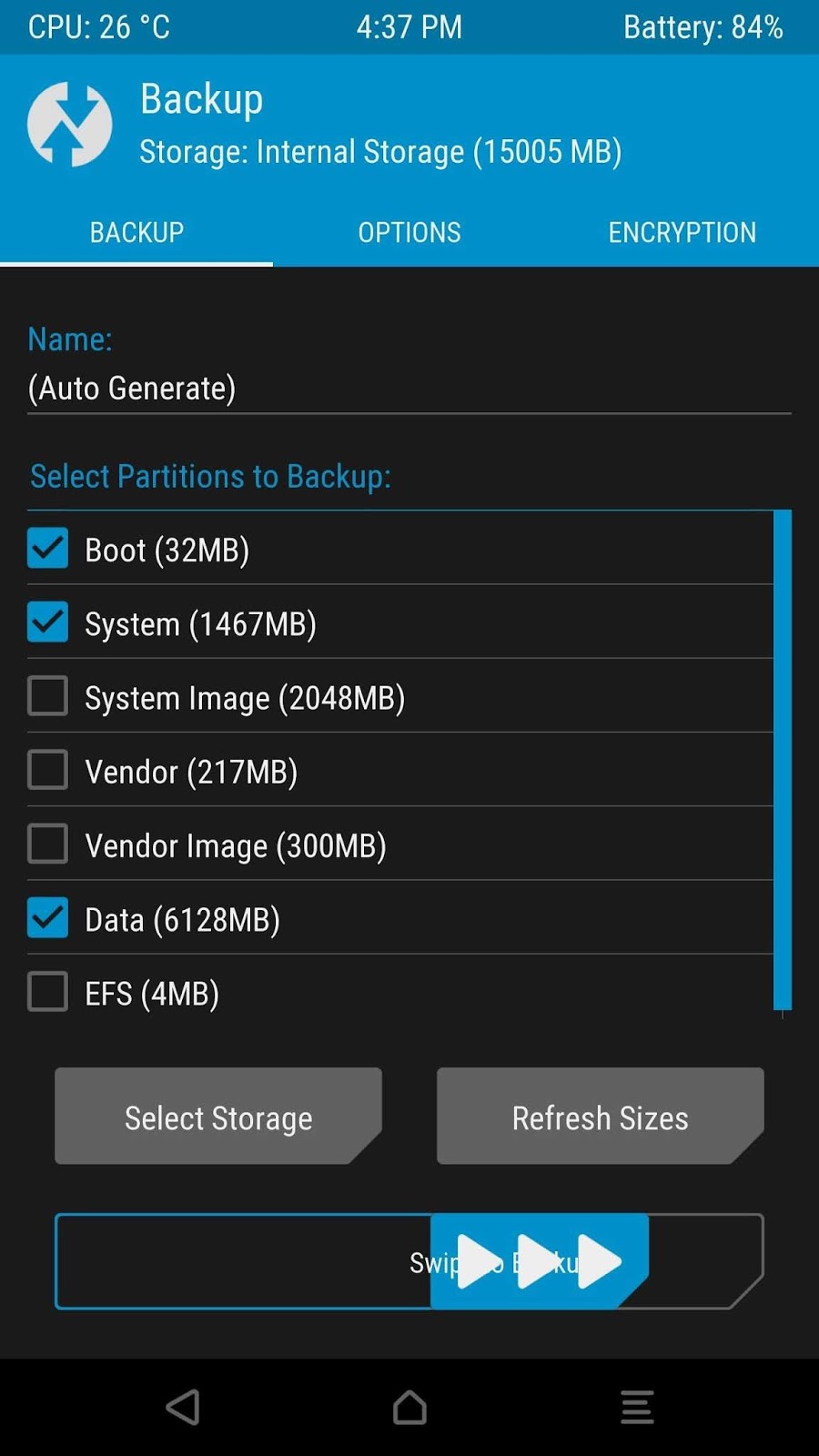
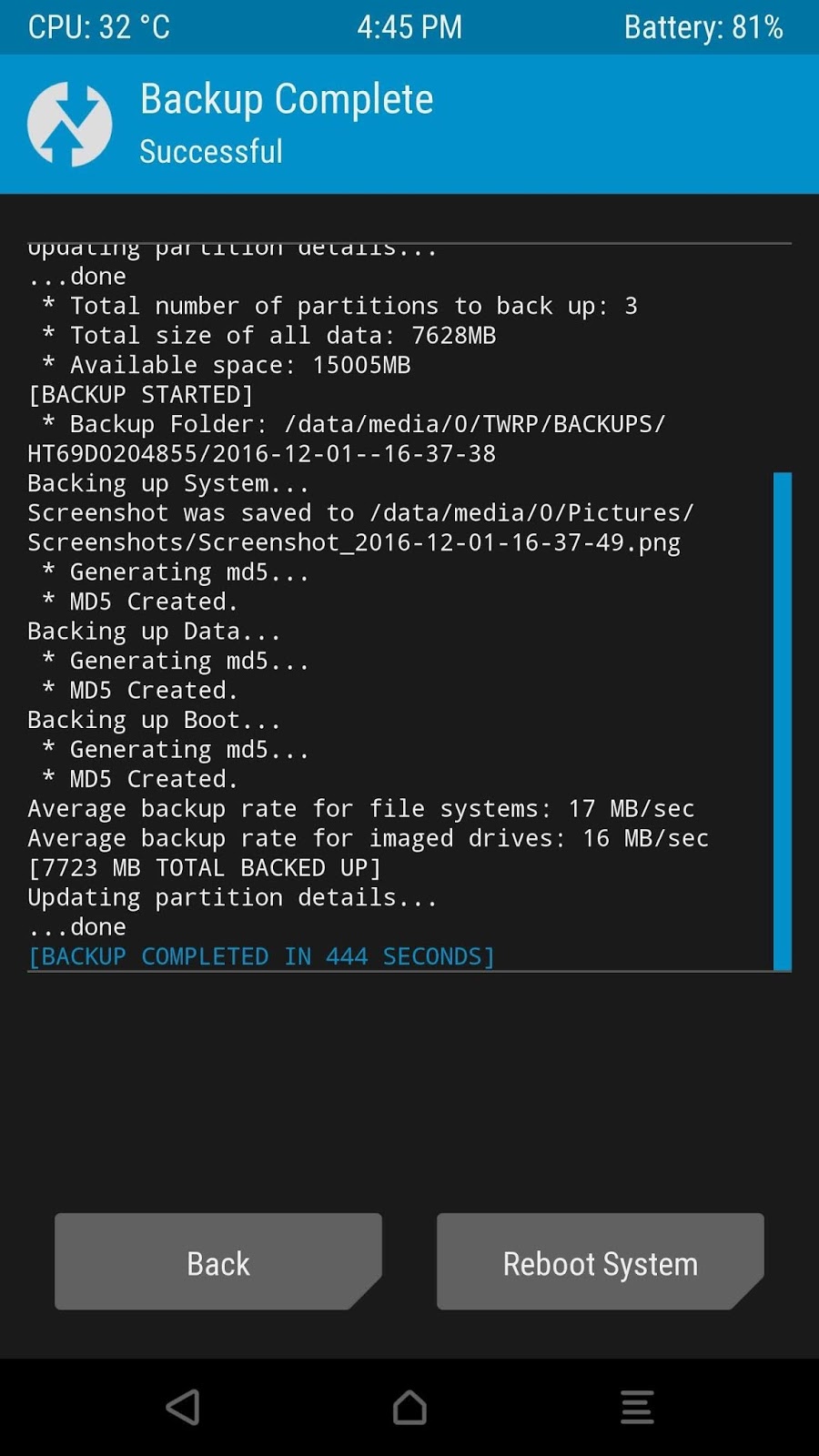
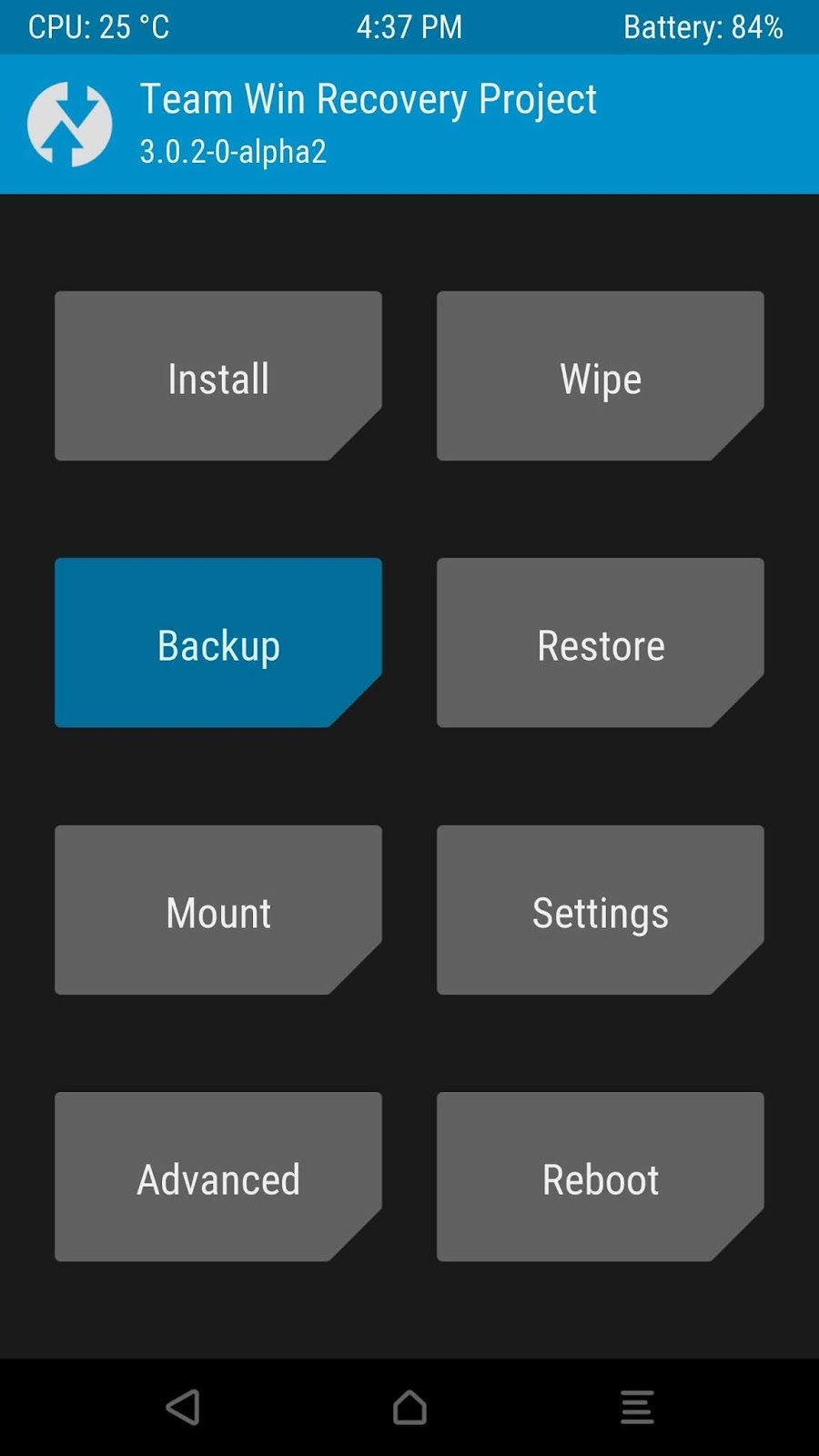
Now, from TWRP's main menu, start by selecting the "Backup" button. After that, you see an inventory of check boxes—make sure that the "Boot," "System," and "Data" options are selected here. Finally, just swipe the slider at rock bottom of the screen to start out the backup process, which may take as long as quarter-hour . When it is done, simply click "Reboot System" to wrap things up.
How-to-Make-a-NANDroid-Backup-and-Restore-Your-Entire-Phone

At this point, you can rest a bit easier knowing that your ROM, apps, and all associated data are safely backed up (note that files saved on your SD card or internal storage aren't included within the backup). You'll want to repeat this process every so often to make sure that you simply always have a recent NANDroid backup on standby.

Restoring a NANDroid Backup

Should you ever got to fix a software problem together with your phone, your NANDroid backup is a restore point. That means that once you restore the backup, every setting, app, and Android-related file will revert to the way it had been once you made the backup.

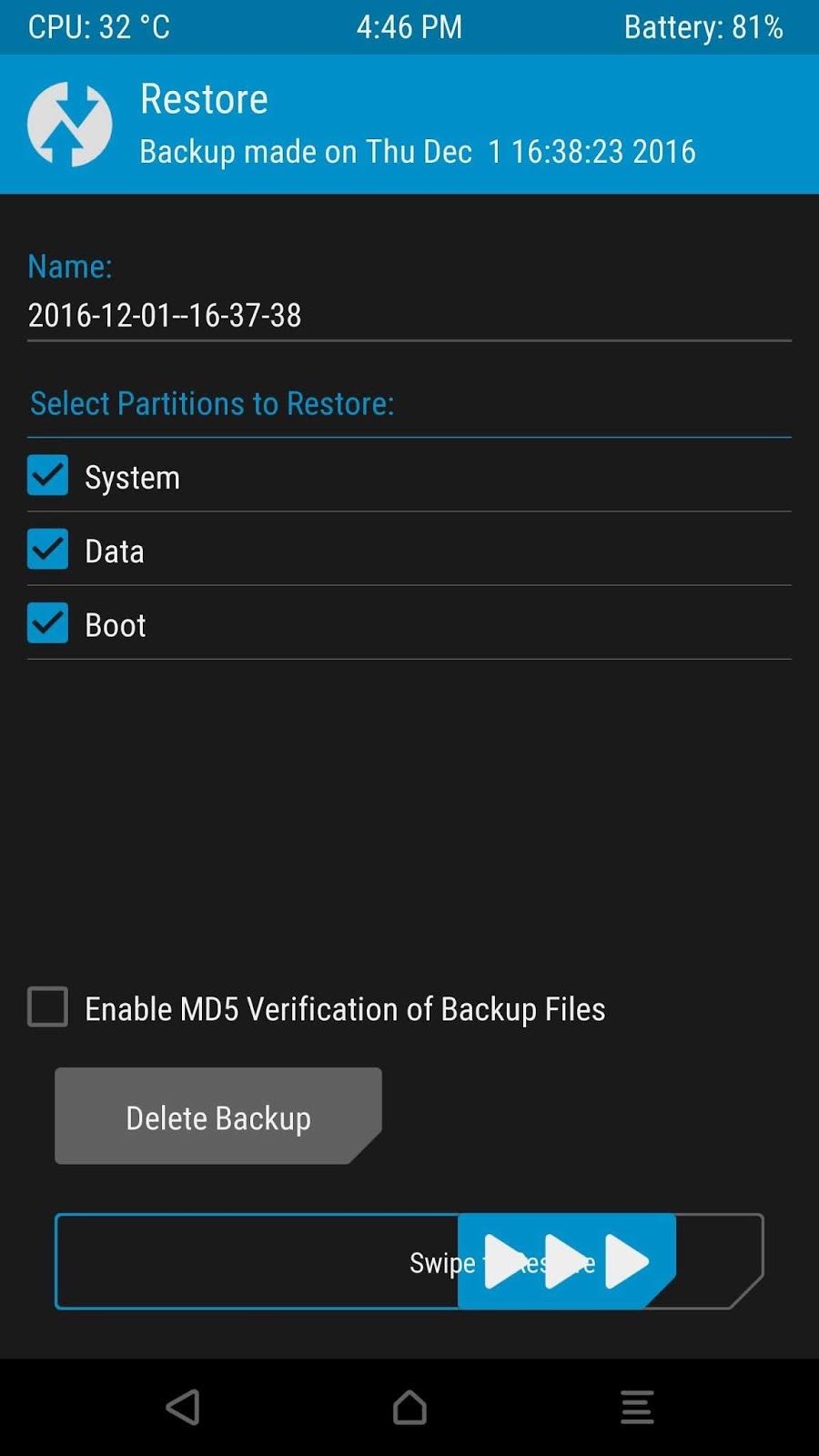
So to repair any modding-related issues, boot your phone into TWRP, then press the "Restore" button. From here, select your backup from the list (it are going to be named supported the date it had been created), then simply swipe the slider at rock bottom of the screen. The restore process can take up to 15 minutes, but when it's done, just tap "Reboot System" and everything will be back the way it was.
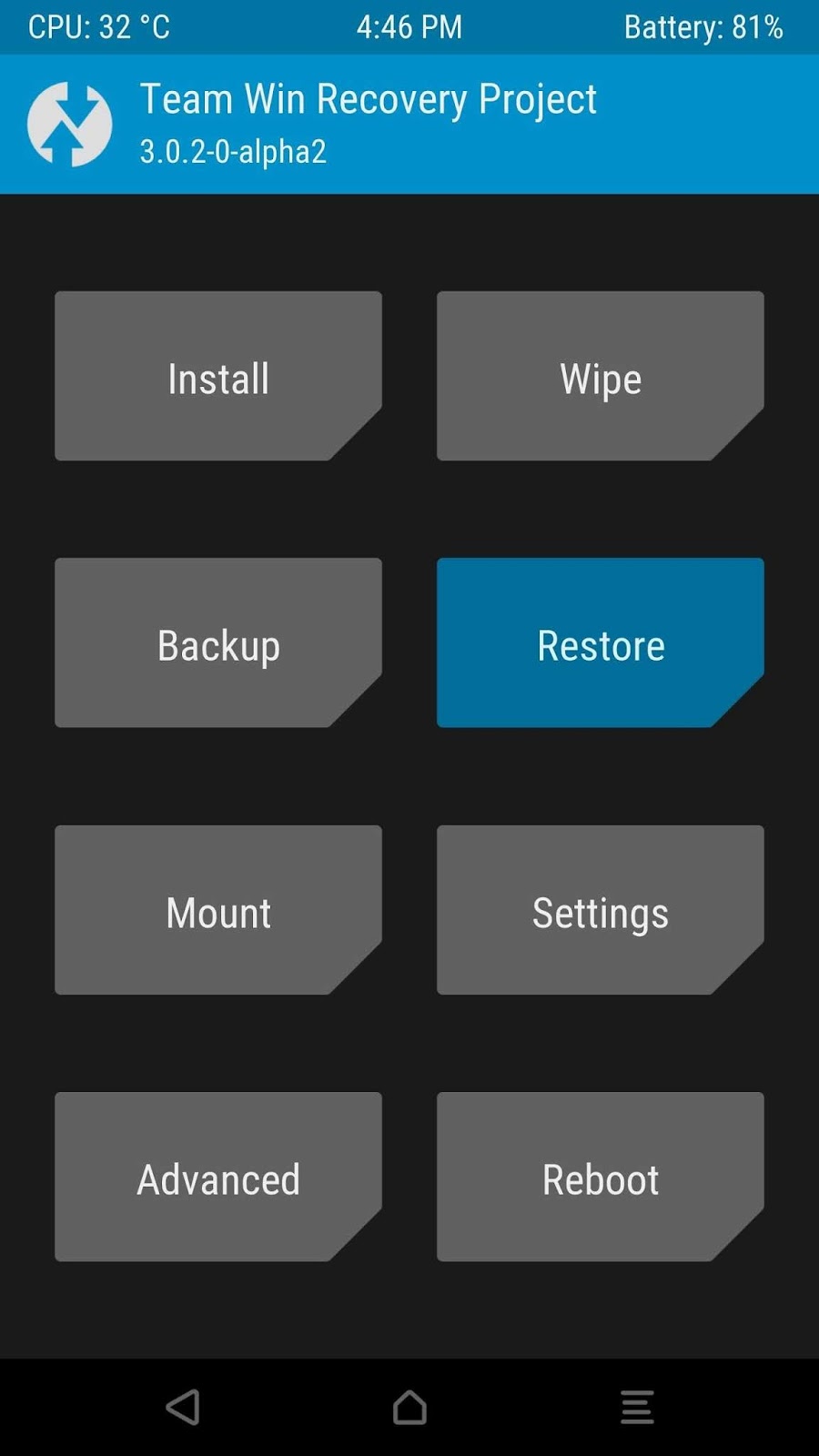
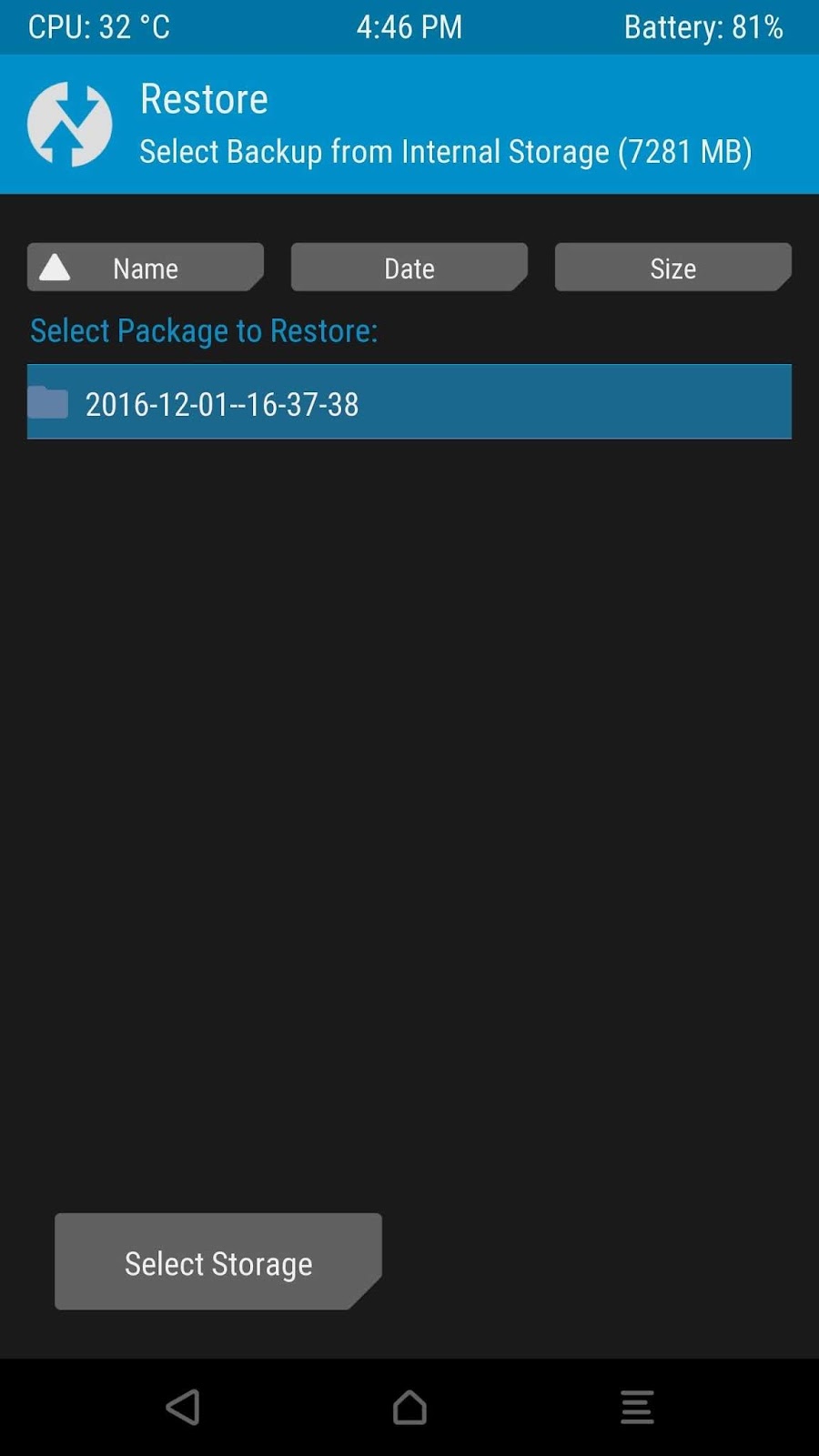
Restoring a NANDroid Backup
How-to-Make-a-NANDroid-Backup-and-Restore-Your-Entire-Phone
Read More

How to Install Best Custom Recovery For Android

How to Install Best Custom Recovery For Android
When it involves modding Android, root gets all the glory, but an honest custom recovery is basically the sole thing you would like. Not only does it allow you to copy your entire phone, install flashable ZIPs, and cargo custom ROMs like LineageOS, but a custom recovery will even allow you to root your device. For years now, the sole custom recovery worth mentioning has been Team Win's TWRP.

The reason for TWRP's success is simple because it supports many Android phones. Really, the sole hurdle when it involves using TWRP is getting the custom recovery installed within the first place, so we'll show you ways to try to to just that.

Requirements

To use this method, your phone will got to be rooted and your bootloader will got to be unlocked.

This is because the app that installs TWRP uses root to try to to so, and with TWRP being a custom recovery image (rather than one provided by your phone's manufacturer), your phone won't let TWRP replace your stock recovery interface unless the bootloader is unlocked.

The best thanks to lookout of both of those requirements is to use CF Auto Root, which works for over 300 different devices. This utility automatically unlocks your bootloader, then roots your phone in round . To learn more about using CF Auto Root, inspect our in-depth guide the topic .

However, some phones aren't supported by CF Auto Root. If this is often the case with yours, we recommend manually unlocking your bootloader, then installing TWRP using fastboot.

Step 1: Install the Official TWRP App

First up, you will need to put in the app which will assist you install TWRP on your phone. It's the official TWRP app from Team Win, and you'll grab it for free of charge from the Google Play Store.

Download Official TWRP App
Install the Official TWRP App

Step 2: Grant Permissions

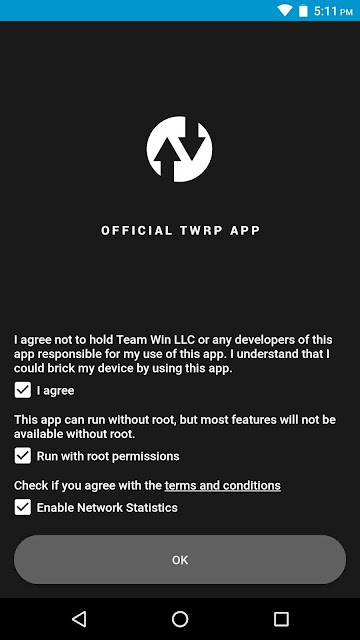
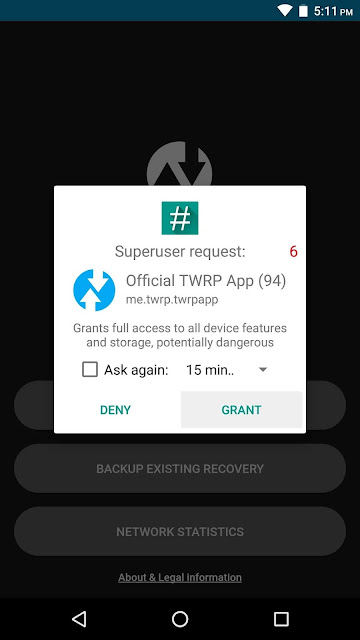
Now, open the TWRP app, then you will be asked to accept the terms of service, so tick all three boxes, and now press "OK." From there, the TWRP app will request for root access, then press "Grant" on the Superuser popup.

Install Best Custom Recovery for Android

Back Up Your Existing Recovery

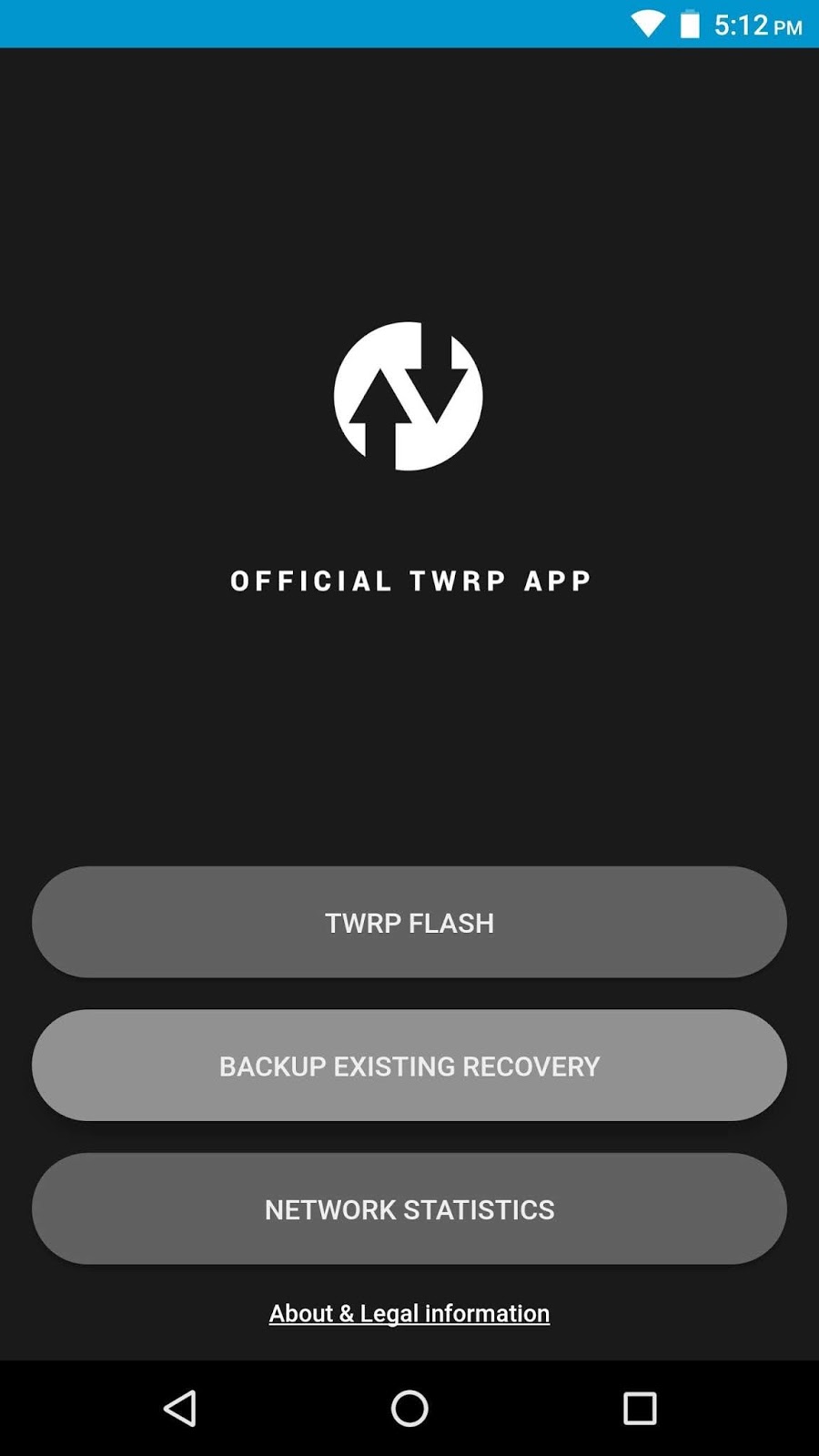
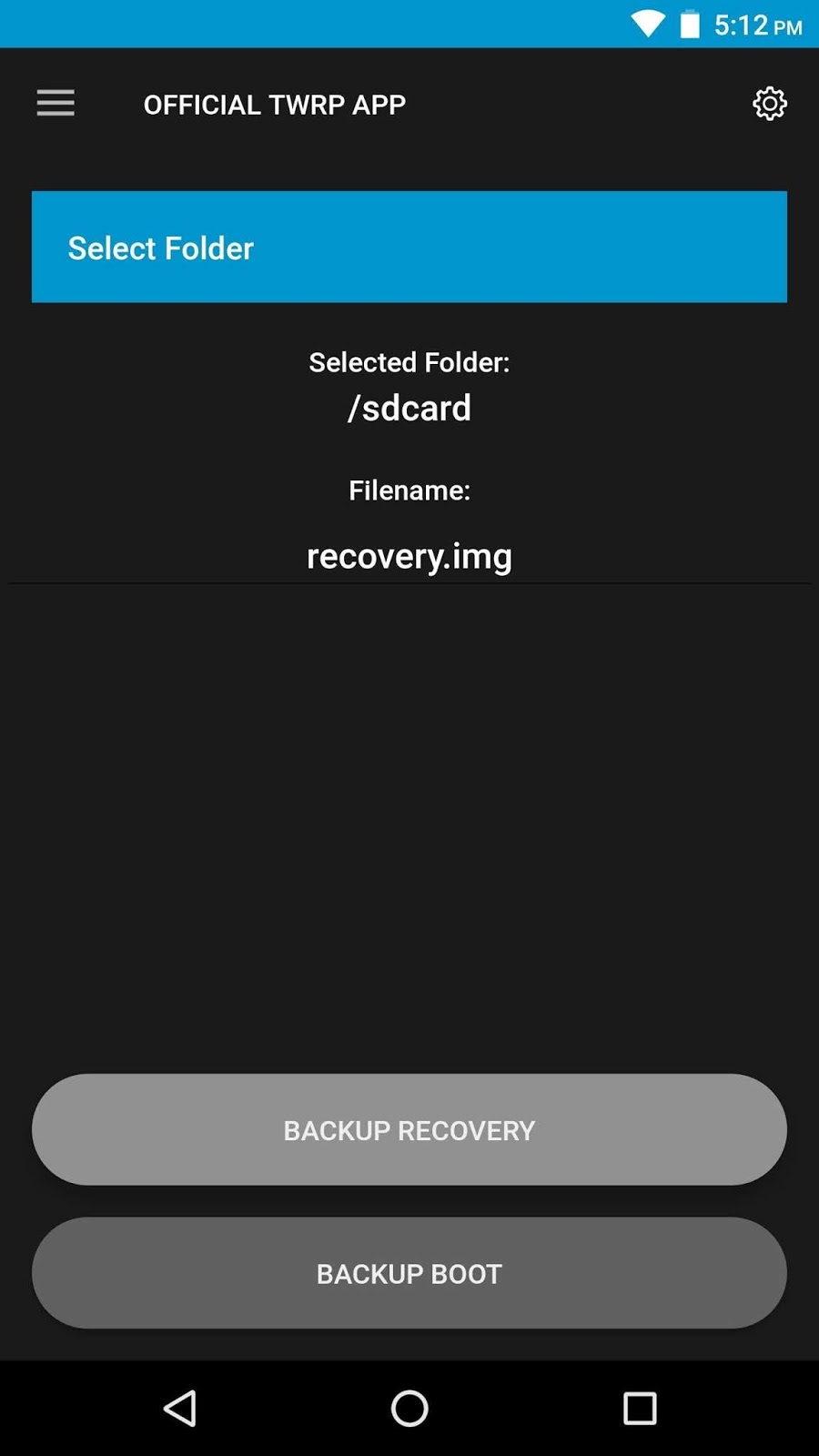
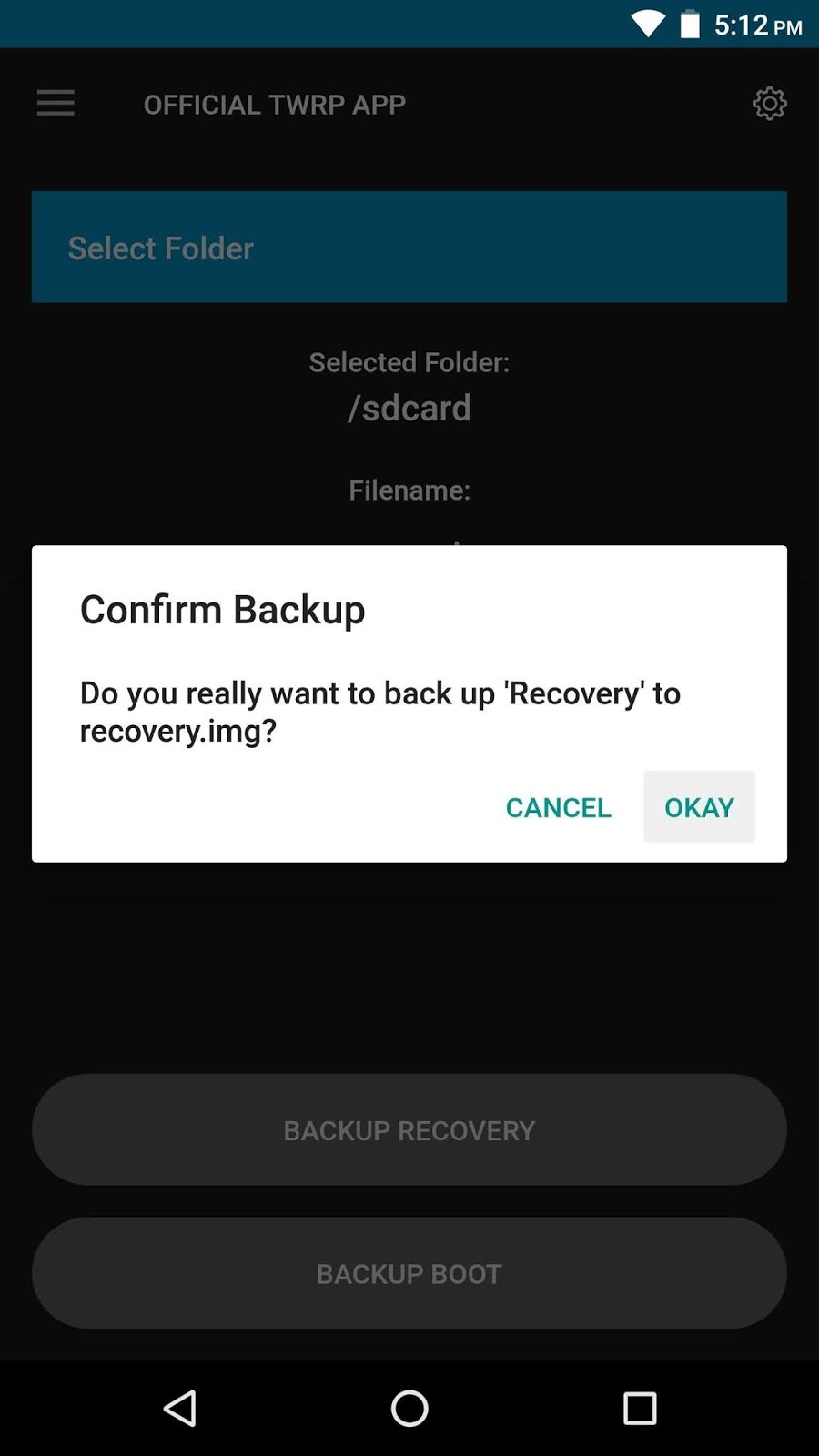
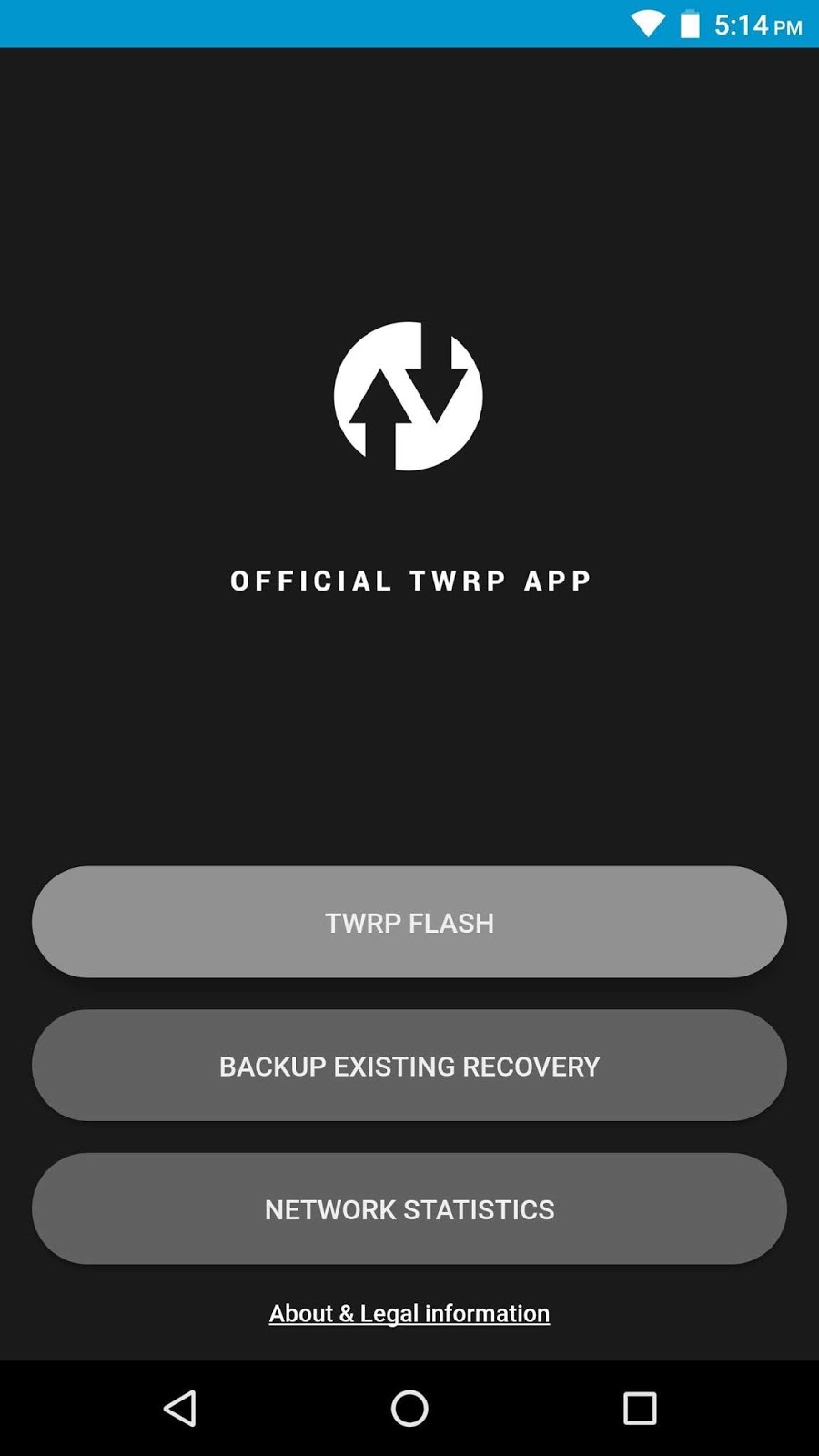
In the future, if you would like to simply accept OTA updates or revert to stock, the simplest thanks to do that would be to make a backup of your existing recovery image before you flash TWRP. To do that, tap "Backup Existing Recovery" within the TWRP app's main menu, then select "Backup Recovery" and press "Okay."
Install Best Custom Recovery for Android
This process will take a minute or two, but when it's done, a copy of your existing recovery image will be saved on your SD card or internal storage partition. Keep track of this file, and if you would like to get rid of TWRP within the future, you'll restore this using the TWRP app's "TWRP Flash" function.

Step 4: Download the exact TWRP Image for Your Device

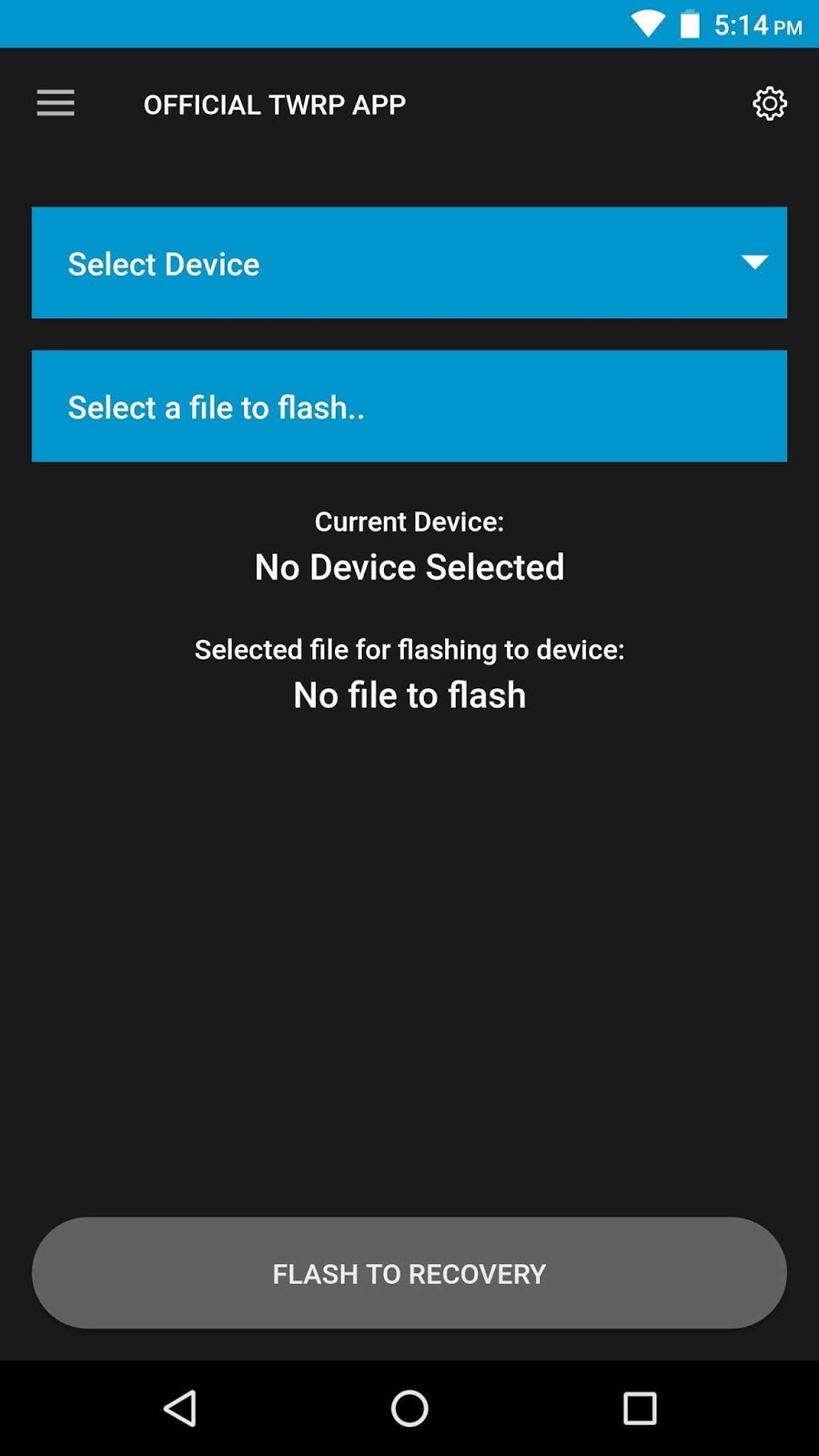
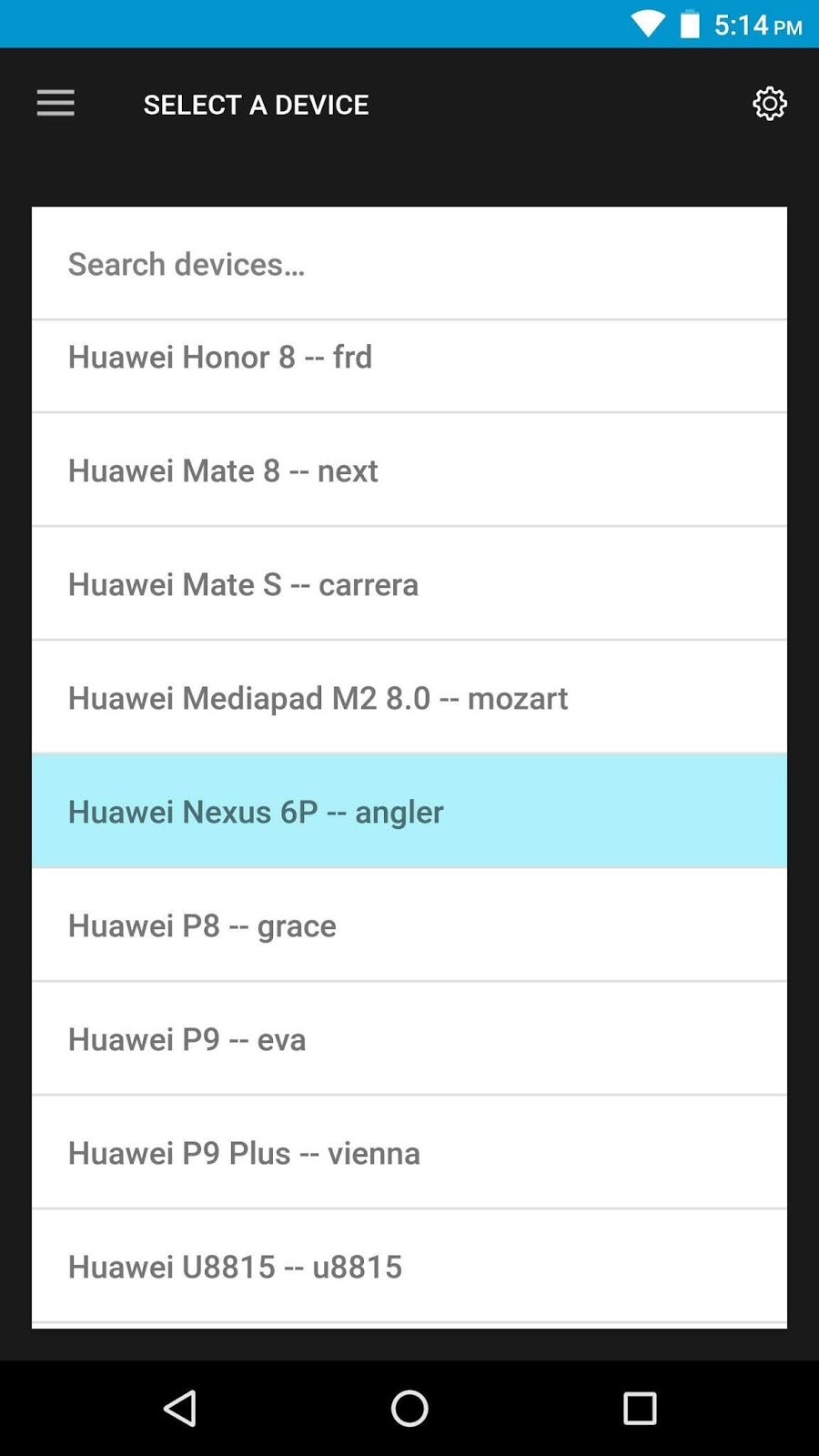
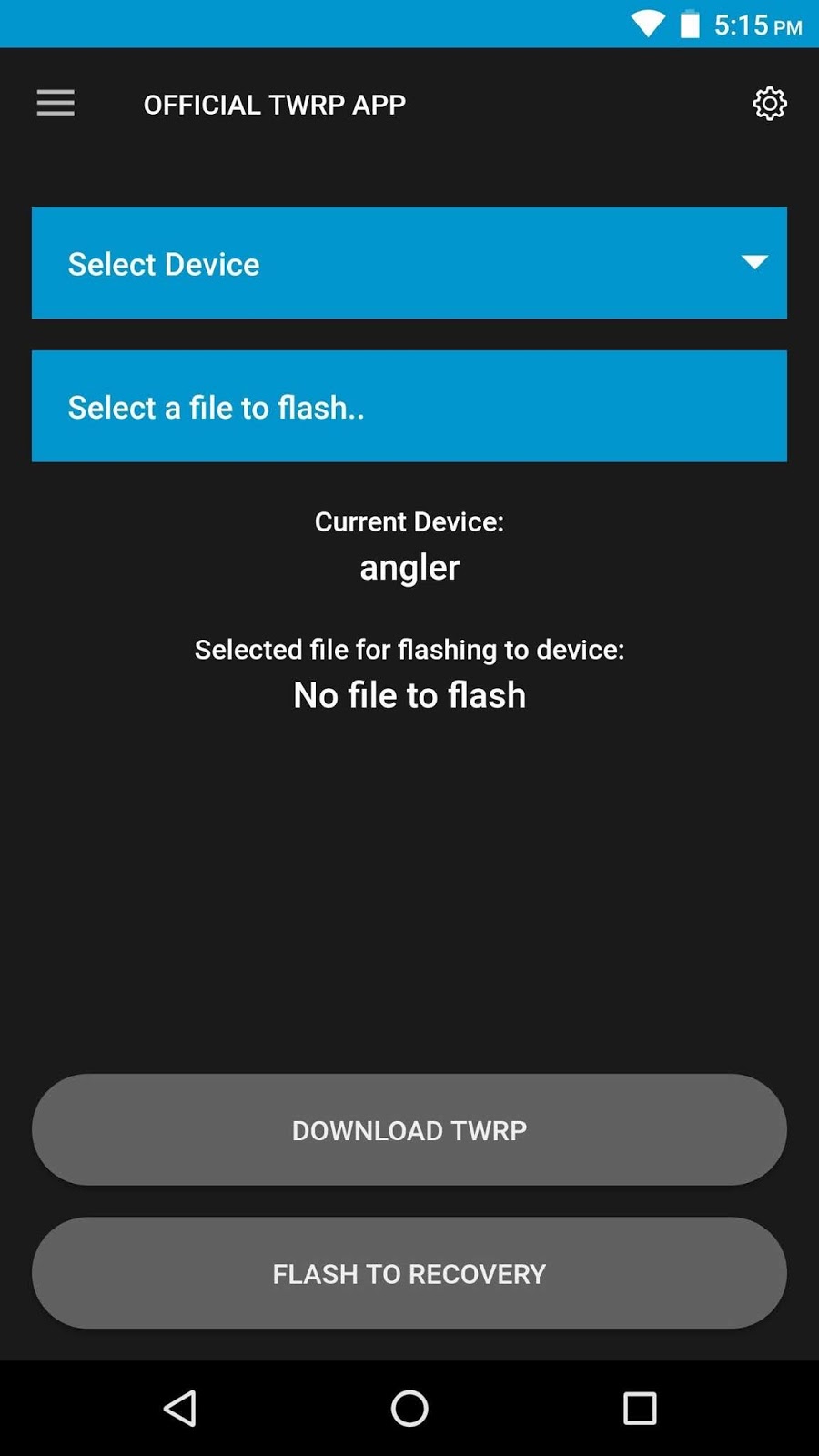
Now it's time to download TWRP itself. To do that, press "TWRP Flash" on the TWRP app's main menu, then tap "Select Device" on the subsequent screen. From there, choose your model from the list.

Install Best Custom Recovery for Android

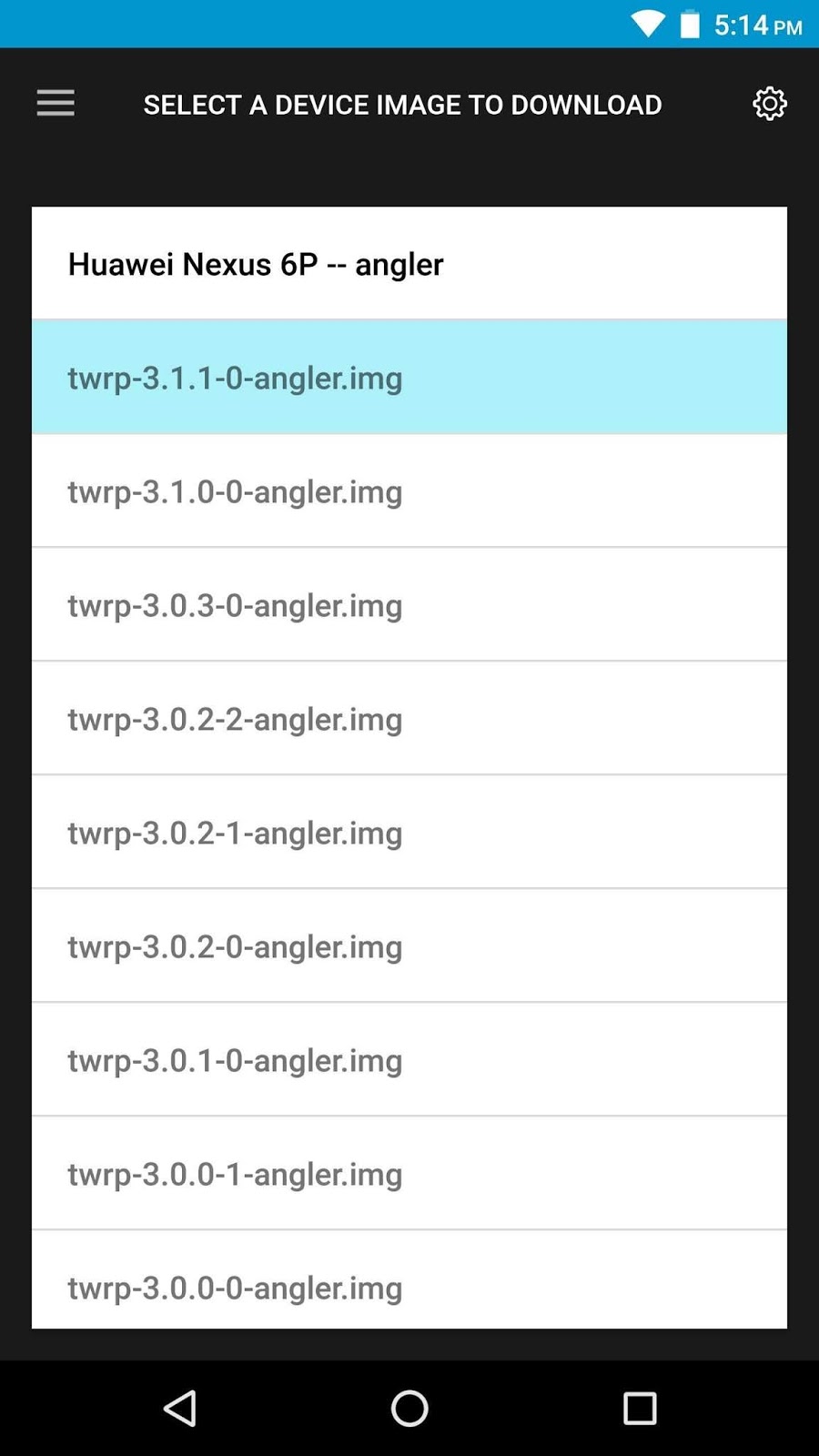
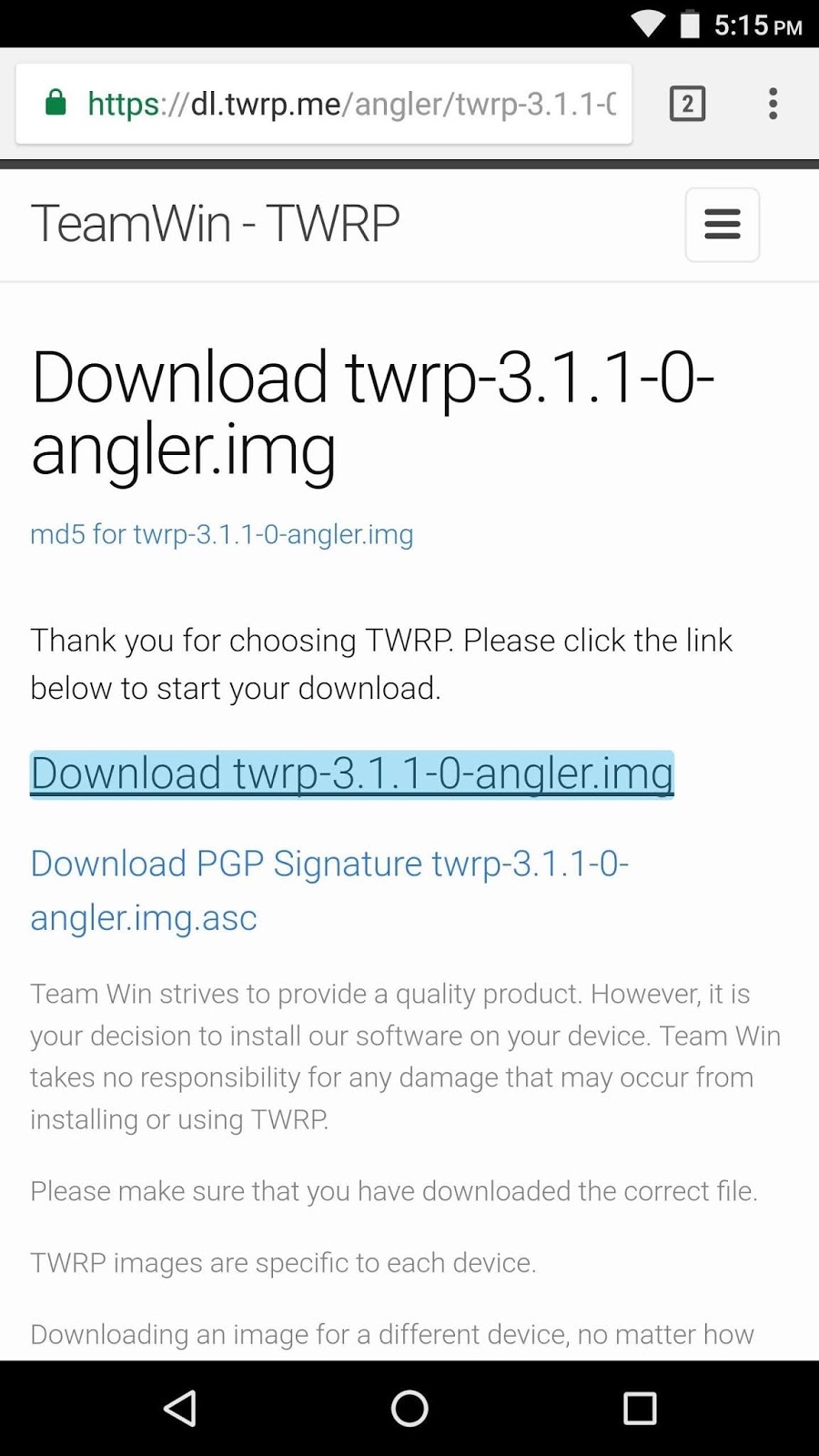
Next, you will be prompted to settle on a TWRP version to download. We recommend going with the newest version, which can be first within the list. Once you've selected a version, you will be taken to a download page in your browser. Tap the most download link towards the highest of the page, and when that's finished, press your back button to go back to the TWRP app.
Install Best Custom Recovery for Android

Step 5: Install TWRP


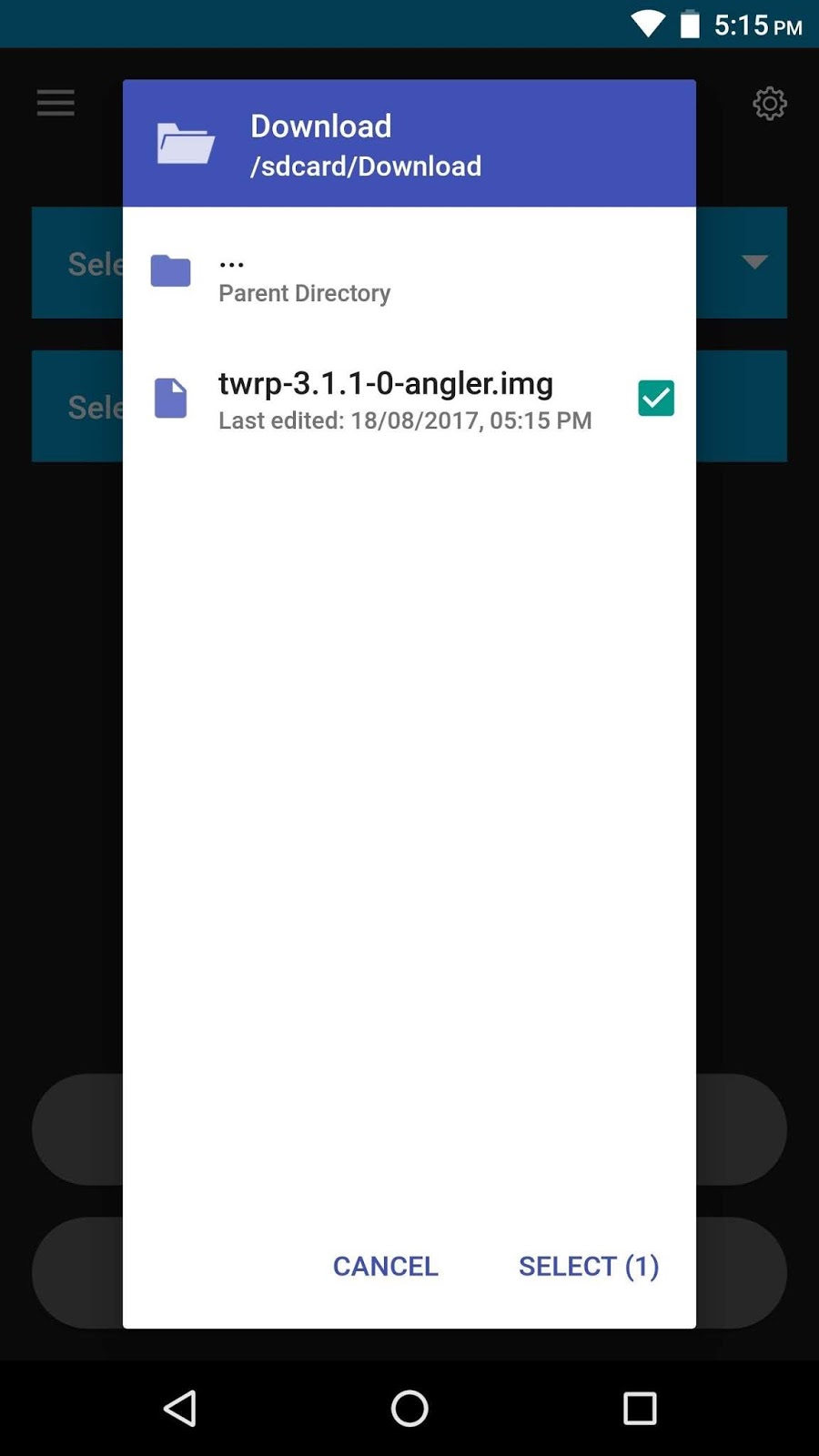
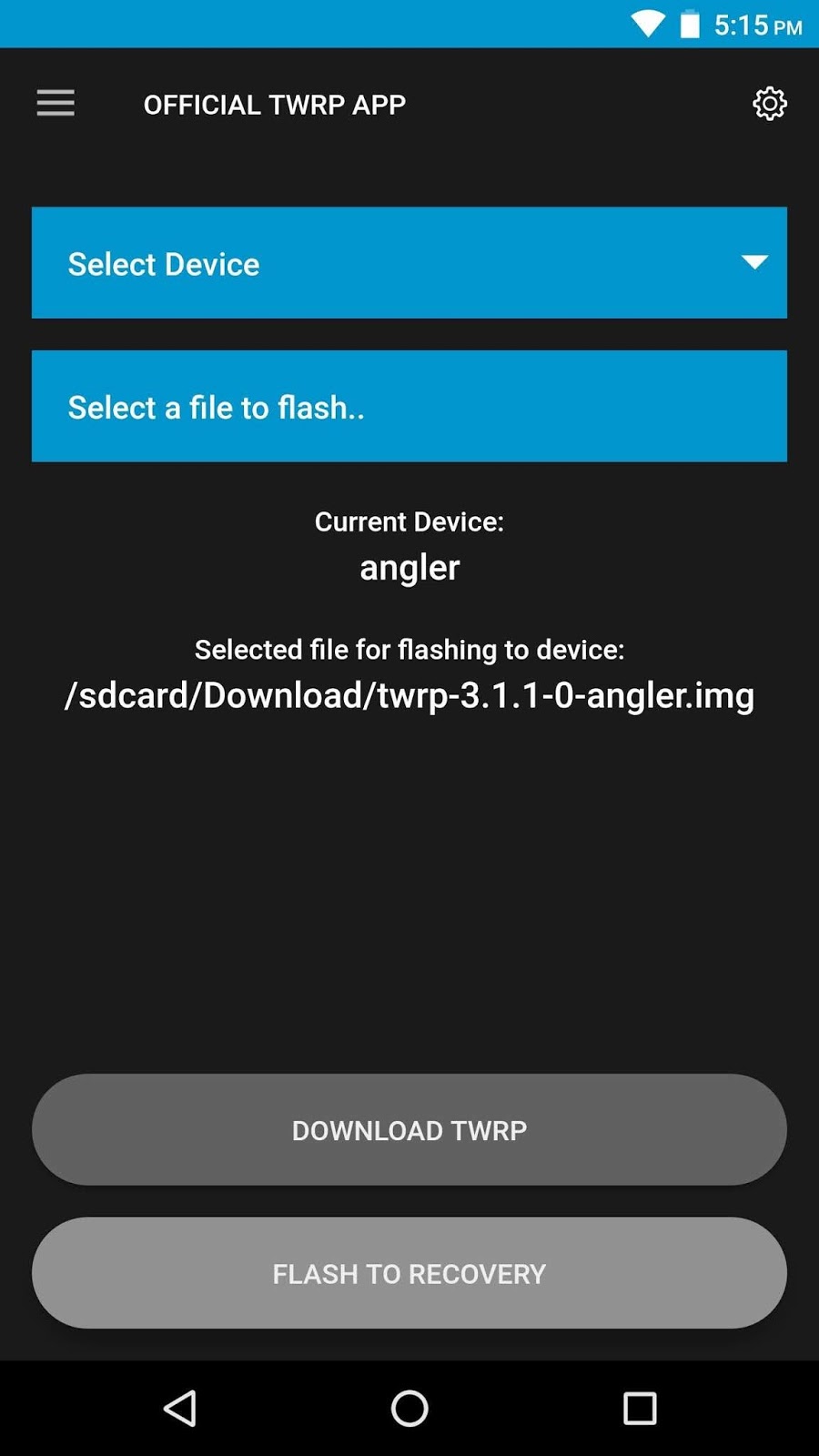
Now, from the TWRP Flash menu, tap "Select a file to flash." then, use the menu that appears to navigate to your device's download folder, then select the TWRP IMG file and click the "Select" button.
Install Best Custom Recovery for Android

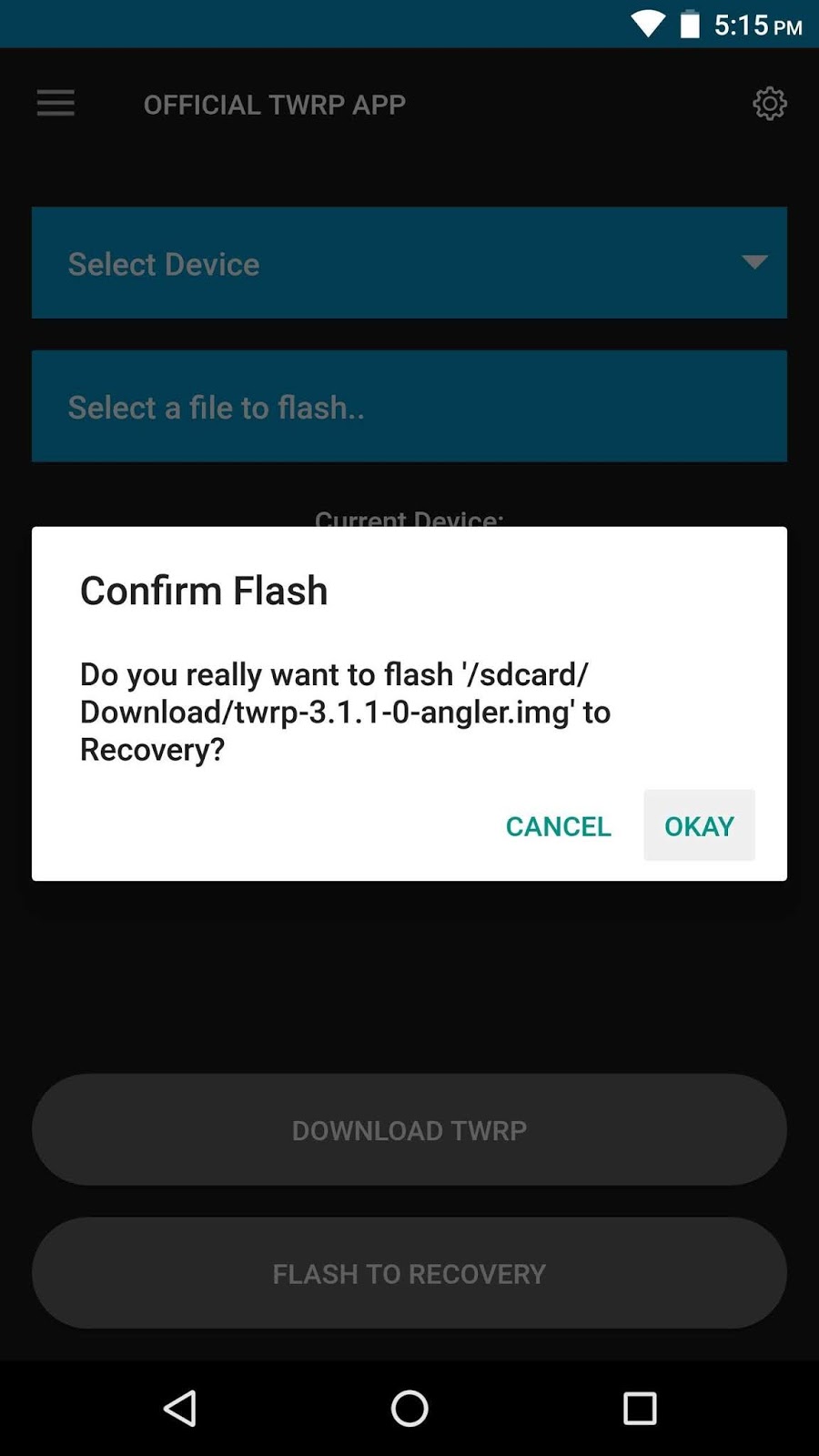
At now , you're able to install TWRP. So tap "Flash to Recovery" at the lowest of the screen, then press "Okay" on the prompt. It'll take roughly 30 seconds to end , and when it's done, you'll see a message confirming that TWRP was installed.

Install Best Custom Recovery for Android

Step 6: Make TWRP Your Permanent Recovery


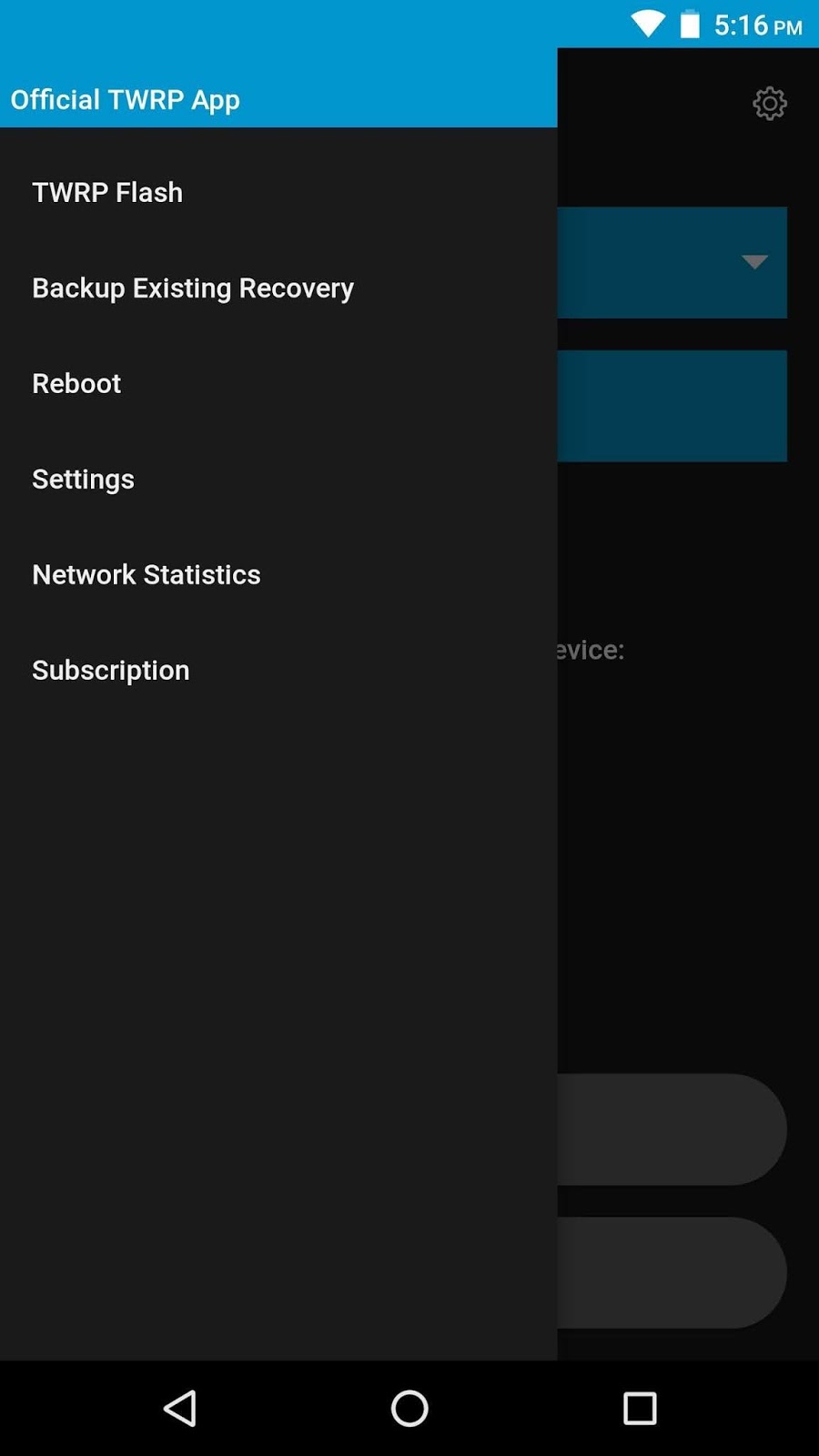
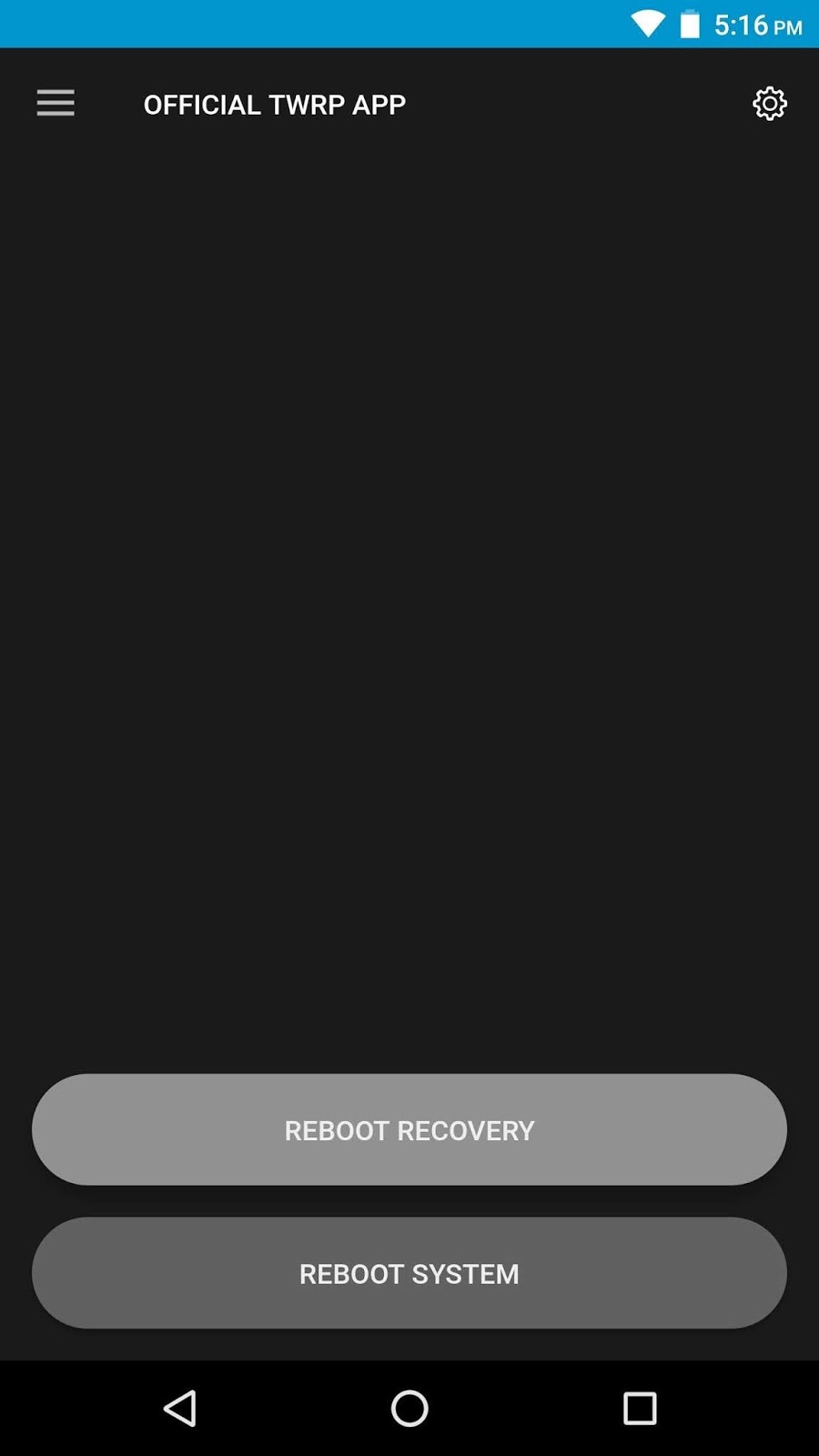
Finally, you'll got to form TWRP your permanent recovery, otherwise Android may overwrite it with the stock recovery image subsequent time you reboot. to try to to this, start by selecting "Reboot" from the TWRP app's side navigation menu, then press "Reboot Recovery" on the next screen. When TWRP boots up, you will be prompted to form it your permanent recovery, so swipe the slider that says "Swipe to permit Modifications" and you will be all set!

Install Best Custom Recovery for Android
But before you escape to flash ZIPs and custom ROMs, the first thing you need to do is create a full NANDroid backup. this is often a restore point just just in case anything goes wrong within the longer term , and we've covered the tactic at the next link:


Read More